Tens of thousands rally across Spain as opposition accuses Sánchez of abandoning Ceuta
Demonstrations in Madrid and Ceuta demand the prime minister’s resignation a month after more than 70,000 migrants crossed into the North African exclave.
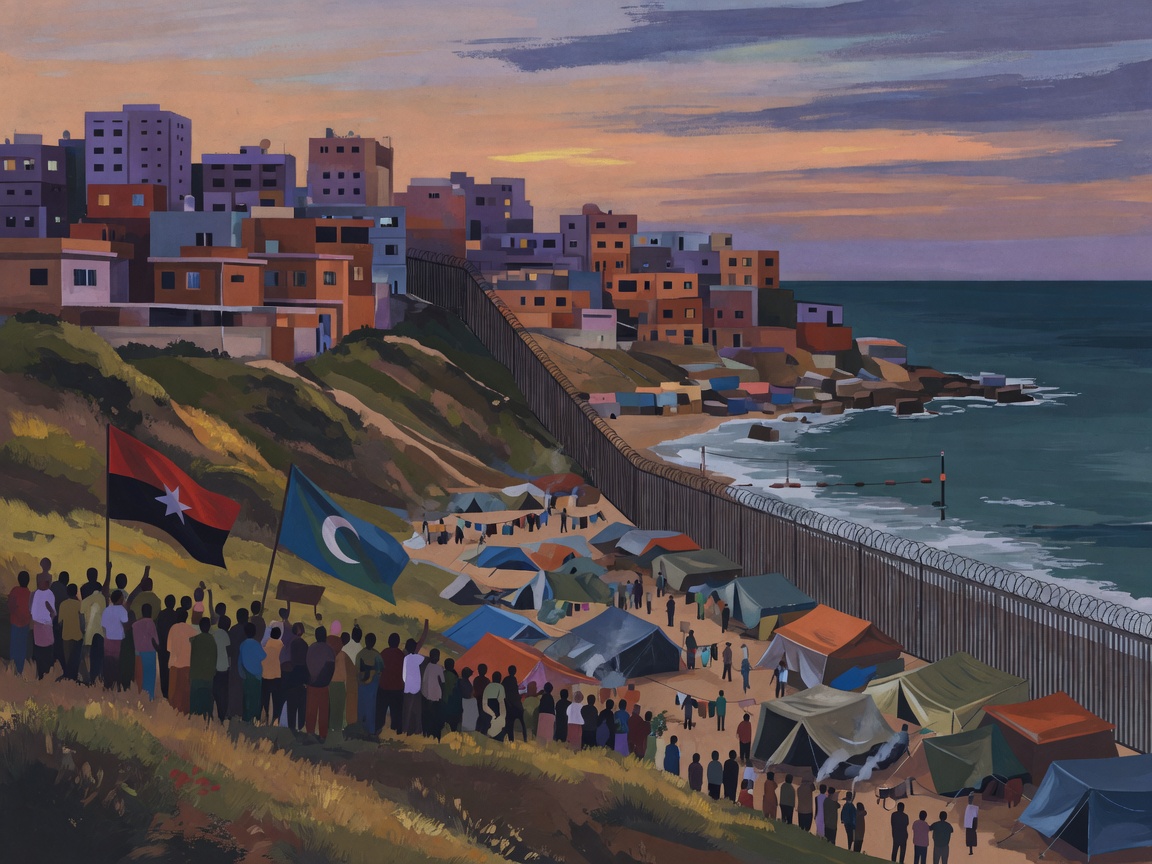
Tens of thousands of demonstrators filled streets across Spain on Wednesday, demanding Prime Minister Pedro Sánchez’s resignation over his handling of a migrant crisis in the North African exclave of Ceuta that has strained the city’s resources and deepened the country’s political divisions.
The rallies drew more than 50,000 people to Madrid alone, according to government figures. Organized by city councils where the conservative Partido Popular and the far-right Vox party hold influence, the demonstrations also drew large crowds in Ceuta itself, where residents draped Spanish and city flags over their shoulders. “Ceuta is not for sale, Ceuta must be defended,” chanted participants. The protests coincided with Ceuta Day.
The demonstrations came roughly a month after more than 70,000 migrants and asylum seekers crossed en masse from Morocco into Ceuta on July 30 and 31. The BBC reported the figure as at least 72,000. At least 100 people died trying to swim around the border fence, according to the mayor’s figures cited by the BBC, while Al Jazeera reported at least 80 deaths. Most arrivals have returned. As many as 5,000 remain, including 1,200 minors, though local statistics cite a higher count.
Sánchez has blamed the surge on a misread court ruling and online disinformation that he said encouraged people to cross the border. He also said negative coverage has been amplified by Russian and Israeli-linked accounts, citing findings from Spain’s intelligence community, though he did not offer proof. Morocco has denied involvement.
A police report submitted by the National Police’s National Immigration and Borders Centre to the National Court pointed to the involvement of Moroccan gendarmes in the crossings. The report claimed the Moroccan police deployment around the border was “clearly smaller than usual” and cited migrants who described a “passive attitude” as the crossings happened. It did not categorically accuse Morocco of being behind the influx.
Opposition sharpens attacks
PP leader Alberto Núñez Feijóo addressed the Madrid rally directly. “A Spanish city has been invaded, occupied and, unfortunately, this happened with the knowledge of the Government of Spain,” he said. Vox leader Santiago Abascal said Sánchez was “at the service, like a lackey, of the Moroccan regime.” Demonstrators called on Sánchez to resign.
Ceuta’s regional leader, Juan Jesus Vivas, who represents the Popular Party, has called the crisis a “violation of Spain’s territorial integrity.” Spain’s territorial policy minister, Angel Victor Torres, accused the conservative and far-right opposition of exploiting the crisis “to attack the government of Spain” instead of helping the city.
The strain has sparked isolated instances of violence. Fights have broken out. A military patrol was stoned. Prosecutors say sexual assaults are happening almost every day in Ceuta. Residents have clashed with police and burned items belonging to migrants in protest of the influx. “The situation has been chaotic, so much so that you can’t go out onto the street,” said Gema Guillen, a protester. David Hernandez, a 45-year-old teacher, told Reuters the government’s response had been “inadequate, late and, to top it all, has involved a complete dereliction of duty.” “We cannot be second-class citizens, and our border must not be sidelined,” he added.
Migrants caught in the middle
Among those stranded in Ceuta is Otman Ianaya, 40, who swam to the territory with his wife and two young daughters. “There is no work in Morocco,” he told AFP. “I want to build a future in my life.” Some migrants sleep on Ceuta’s beaches. The Spanish government has worked to expand emergency housing and increase funds to social services, but critics have called the effort insufficient.
Madrid has pledged 309 million euros ($357 million) in aid for Ceuta. A large number of social media posts appeared in August portraying the border fence as safe and easy to cross. Spanish fact-checking website Maldita reported that before July 30, messages circulated on Moroccan social media encouraging people to attempt the crossing, following a June ruling by Spain’s Supreme Court.
Halima Ahmed of Luna Blanca, a nongovernmental organization that distributes food and aid to migrants, appealed for compassion. “They are people in a vulnerable situation; we need to have a little bit of empathy,” she said. “People are tired, people are fed up... but that does not justify any type of violence,” she added.
Morocco has a long-standing claim over Ceuta and its fellow autonomous city, Melilla, which have been a flashpoint in diplomatic relations between the two countries. The crisis has tested that relationship, and Sánchez’s political standing, as pressure mounts from residents and opposition parties alike.
Sources & methods
- BBC News article on protests in Spain against the government's handling of the Ceuta migrant crisis, including opposition quotes, police report findings, and casualty figures from the mayor. Archived Sep 3, 2026
- Al Jazeera article on the protests a month after the mass crossing, including migrant interviews, government aid pledges, accounts of violence, and quotes from NGO workers and residents. Archived Sep 3, 2026
This article was assembled from two published news reports, one from BBC News and one from Al Jazeera, with direct quotes drawn from both sources and from Reuters and AFP reporting cited within them.