Trump confirms ‘minor strikes’ on Iran as missiles again hit Qeshm Island near the Strait of Hormuz
Trump partly blamed the Republican defeat at the midterms on the war, even as both sides signal openness to a deal.
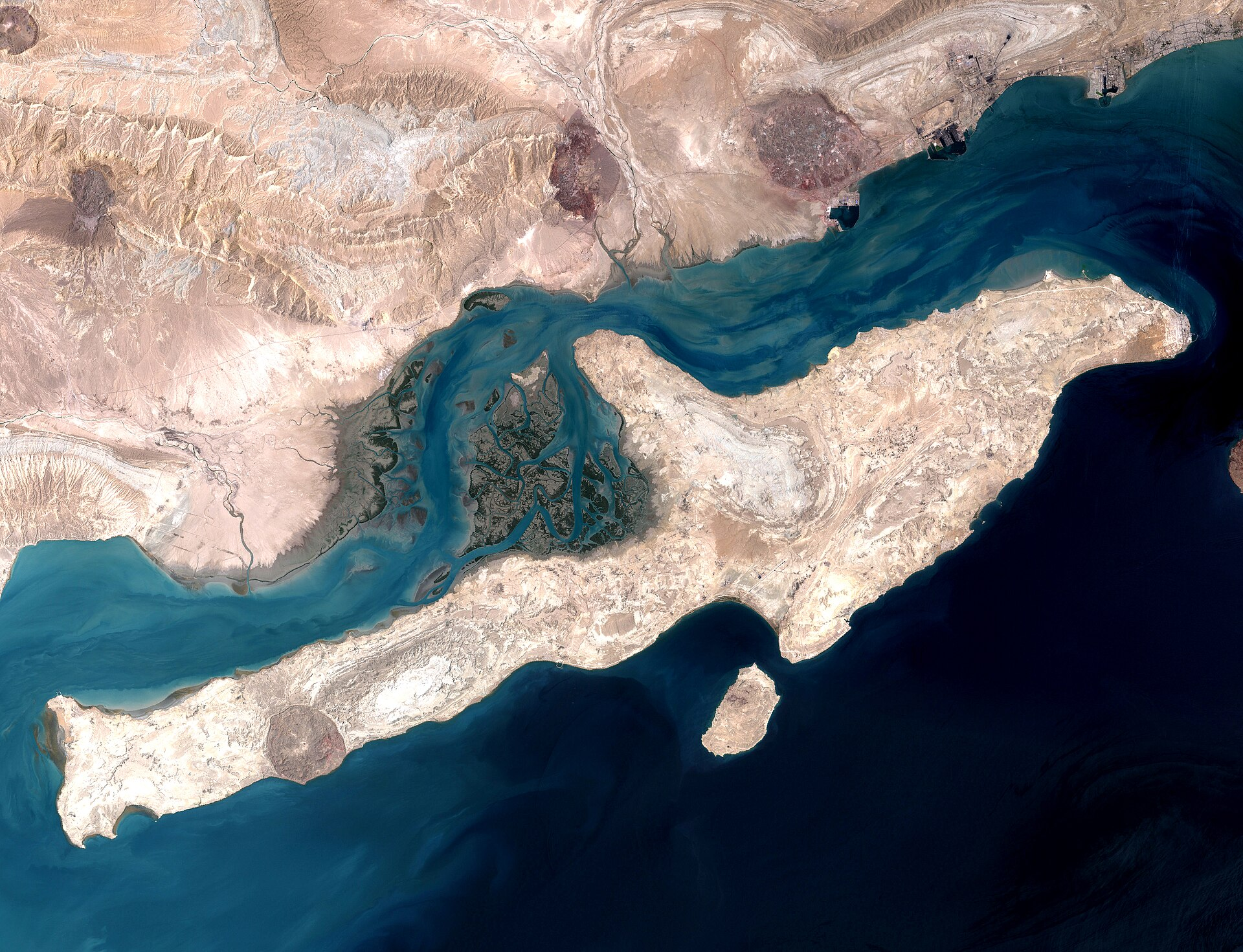
President Donald Trump told reporters Friday the U.S. carried out ‘minor strikes’ on Iran, as two missiles struck Qeshm Island near the Strait of Hormuz on Friday.
The strikes are the first since Tuesday’s midterm elections. Trump acknowledged the war was partly to blame for the Republican defeat at the midterms. Yet he also struck a conciliatory note, saying Iran wants to make a deal and that the U.S. administration is talking to Iranian representatives. The mixed signals — military action paired with talk of diplomacy — have defined his posture since the vote.
Trump spoke to reporters Friday evening after landing in West Palm Beach, Florida. He did not explicitly confirm he was referring to the reported strikes on Qeshm, telling reporters, ‘I don’t want to talk about it.’ He then elaborated: ‘We do minor strikes, but they knock out. They built a little bit of an anti-aircraft device, and we knocked it out in about 15 minutes, maybe five.’ Iranian news agency Tasnim reported the missile strikes, with no official information on damage, according to Reuters. Iran’s official news agency IRNA reported two missiles struck Qeshm Island in the Suza area of the island.
Qeshm Island: a repeated target
Qeshm Island is considered a primary naval base for Iran and houses ‘missile cities.’ The U.S. had previously struck Qeshm Island on Monday, described as a ‘defensive’ measure. An unnamed U.S. official told AP that Monday’s strikes were to prevent Iranians using surface-to-air missiles against US assets. Iranian state broadcaster IRIB reported an Iranian army statement saying air defence forces intercepted and destroyed a U.S. MQ-9 drone over the island, though that claim has not been independently verified. CENTCOM said the situation is ‘relatively calm.’
Diplomatic track runs alongside the strikes
Iran has stated conditions that must be met before diplomatic talks proceed, and has said it wants more than ‘paper commitments’ from the U.S. Ali Bagheri Kani, deputy secretary of Iran’s Supreme National Security Council, told IRIB that Iran must see practical measures by the Americans. On Thursday, Iran offered the U.S. a new nuclear and peace proposal via Qatari mediators, to be discussed only after Washington meets Tehran’s seven demands. Iran’s conditions for reopening the Strait of Hormuz include lifting sanctions, unfreezing Iranian assets, ending the U.S. naval blockade on Iranian ports, and guaranteeing an end to attacks. Qatari FM spokesperson Majed al-Ansari dismissed claims on X that U.S.-Iran negotiations had failed, warning such claims benefit only those seeking to prolong the war.
Escalation signals on both sides
The diplomatic track has not halted escalation preparations. Trump told reporters Thursday the U.S. may have to ‘destroy’ the rest of Iran, adding that people will ‘know soon enough’ if he acts, a remark distinct from his Friday description of ‘minor strikes.’ Axios quoted a U.S. official saying CENTCOM is preparing for the resumption of major military operations in Iran, awaiting orders from Washington. On the Iranian side, the UK’s Times newspaper reported that Iran is distributing iodine tablets to communities near its nuclear facilities. YJC reported health authorities distributing iodine tablets to residents of Bushehr, home to Iran’s only operational nuclear power plant. During every war, Iran has tried to distribute iodine tablets within a radius of two to three kilometers of nuclear facilities. The U.S. State Department’s Rewards for Justice programme announced Friday it is offering up to $20m for information about Iran’s nuclear programme. A spokesman for the supreme adviser to the commander of the Aerospace Force of the IRGC said any country or force helping America attack Iran could be a legitimate target.
Political pressure at home
Trump is facing opposition to the war from voters and within his own Republican Party after the Republican defeat at the midterms. Hassan Ahmadian, an associate professor at the University of Tehran, wrote on X that Trump has no clear idea of how a limited strike would end. Ahmadian said Iran’s ‘cognitive warfare’ has kept Trump ‘in the fog’ and he ‘needs to make up his mind fast, before next January.’
Sources & methods
- CNBC, reporting on Trump's remarks and Tasnim/Reuters reporting on Qeshm Island strikes Archived Nov 7, 2026
- Al Jazeera, reporting on IRNA, IRIB, AP, Axios, YJC, The Times (UK), and statements by Qatari FM spokesperson and Iranian officials Archived Nov 7, 2026
This article is based on reporting from CNBC and Al Jazeera, drawing on statements by President Trump, Iranian state media (Tasnim, IRNA, IRIB, YJC), Reuters, AP, Axios, The Times (UK), CENTCOM, the U.S. State Department, and Qatari and Iranian officials. Claims that could not be independently verified, including Iran’s assertion it destroyed a U.S. MQ-9 drone, are attributed to their sources.