Trump weighs ‘massive attack’ on Iran as Pentagon quietly lowers war death toll
The president told Axios he is close to a decision on strikes bigger than any previous operation, while the Trump administration removed four service members killed this month from the official count.
President Donald Trump said he is considering a “massive attack” on Iran that would exceed any operation in the war so far, telling the Axios news website he is “close to making a decision” as the Pentagon quietly lowered its official death toll from 18 to 14 and both sides continued trading strikes across the Gulf.
“I am considering a massive attack. Bigger than ever before. I am close to making a decision. We are all set for it,” Trump told Axios. He said Iran has not “received enough pain yet.” The president gave no deadline for his decision. He said Israel would join the operation “in two minutes if I ask them to,” but acknowledged that Israel would potentially face retaliation from Iran if it took part. Trump also said the Iranian side “want to negotiate” but is not yet ready to make a deal with the U.S.
Pentagon removes four deaths from official count
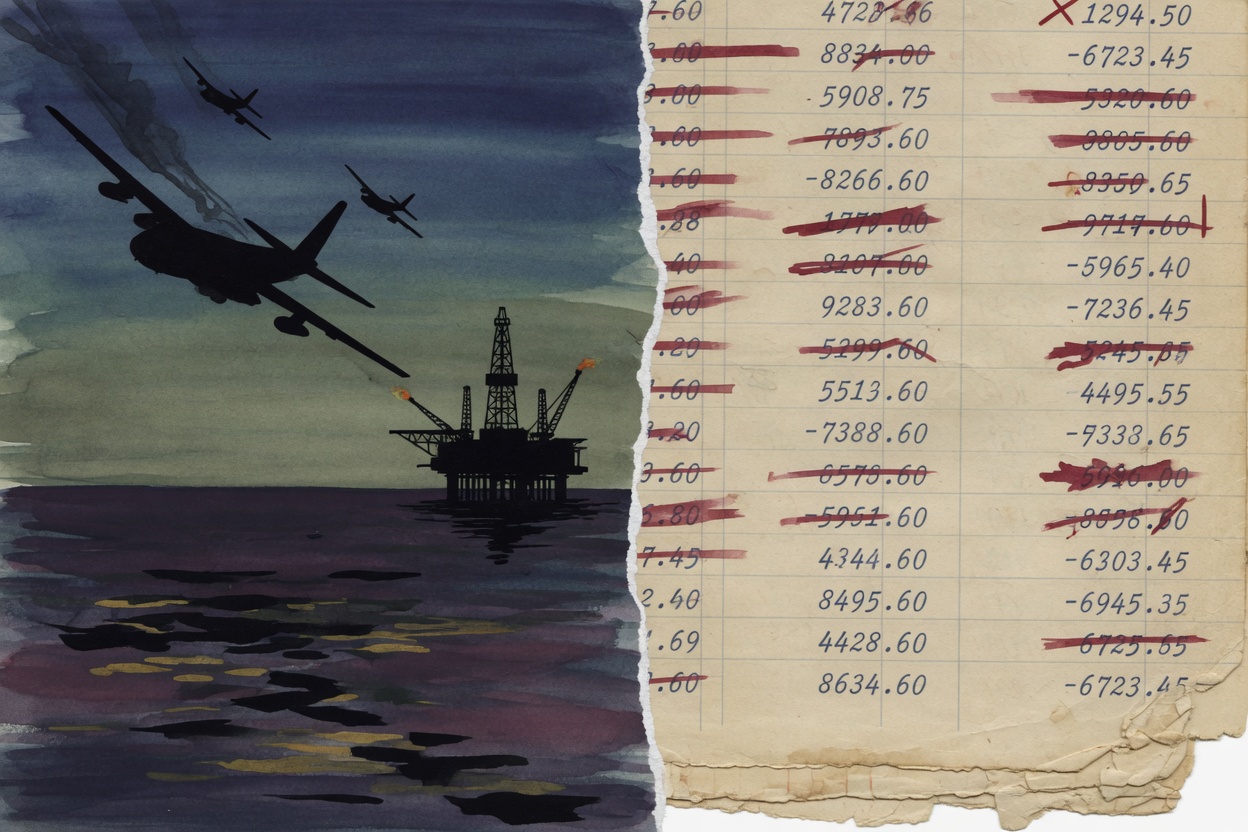
The Pentagon lowered its official death toll for the Iran war from 18 to 14 in the space of a day. The Trump administration removed four service members killed this month from the count, according to the Defense Casualty Analysis System. The database showed seven of the 14 total deaths were classified as “hostile.” The New York Times reported the change earlier. Three military officials told the Times that the four service members killed this past weekend, three in Jordan and one in northern Iraq, were struck from the list because their deaths came after Trump declared a ceasefire in April. All of the deaths listed on the website as of Thursday occurred in March.
Acting Pentagon press secretary Joel Valdez attributed the change to “temporary data disruptions” on the department’s casualty website that he said would be fixed quickly, according to the Times. The revision came amid scrutiny of the administration’s handling of casualty data as the conflict drags on. Rep. Adam Smith, D-Wash., said Monday that Trump has not shared Iran war casualty statistics with Congress and that “there has been no transparency from the President or the Pentagon about the full extent of equipment losses and casualty statistics.” The Pentagon has released little on U.S. military strategy since the ceasefire collapsed and has not held a major briefing on the war since early May. Trump himself has used the higher figure. At an event on Thursday, he said, “I had a very sad day yesterday. I went to Dover, four great American patriots killed. That’s 18 … and one is too many, but it’s 18.”
Strikes and retaliation continue across the region
Iran said it carried out drone strikes on U.S. military facilities and bases across the Middle East in retaliation for the 13th consecutive night of American attacks. Explosions were reported along Iran’s Gulf coast and in western, northern, and central areas. Four people were killed and five injured in an attack in the south-west, Iranian state media said. Iran’s Revolutionary Guard said it had attacked U.S. military facilities at an American base in Jordan. Iran later announced strikes on U.S.-allied Kuwait. Sirens sounded in Bahrain and Jordan. Flights were suspended at Iraq’s Erbil International Airport after a reported drone crash, and have since resumed.
U.S. Central Command said it had targeted “Iranian military command centers, drone storage facilities, communication networks, coastal surveillance sites and maritime capabilities” to degrade Iran’s ability to threaten civilian shipping in regional waters. The conflict has extended to a new battleground in the Red Sea, where Yemen’s Iran-backed Houthis claimed to have struck two Saudi oil tankers. The Houthis declared a maritime embargo against Saudi Arabia on Monday, threatening to cut off the kingdom’s oil exports through the Red Sea and the Bab el-Mandeb Strait. Trump vowed “major military punishment” against Iran for the Houthi attacks, writing on Truth Social that the U.S. would hold Iran responsible because “the Houthis are a Surrogate and/or Proxy of Iran.”
Secretary of State Marco Rubio told reporters the approach was “a head for an eye.” “Honestly, that’s what it’s going to be,” he said. “They will pay a very heavy price for the things they’re doing. They’re already paying a very heavy price.” Oil prices fell about 1% on Friday morning but were still on course for a weekly rise of 10%. Global benchmark Brent crude futures held above $99 per barrel, while U.S. West Texas Intermediate crude futures were trading at $91.08 a barrel.
In June, the U.S. and Iran agreed on a 14-point Memorandum of Understanding to halt military operations and reopen the Strait of Hormuz, with a goal of reaching an agreement within 60 days. Three weeks after it was signed, Trump declared the ceasefire “over” after Iranian attacks on ships in the strait and U.S. strikes in response. Iran condemned a U.S. plan to use frozen Iranian assets to pay for war damages. Trump said on Truth Social that damages to ships and cargo in the Strait of Hormuz would be paid for by “Iranian Money that the United States has in its possession, and controls.” Iranian Foreign Minister Abbas Araghchi called the move “an incendiary precedent” and warned that “ensuing chaos will not be pretty or peaceful.”
Iran’s Ministry of Foreign Affairs separately labeled the U.K. an “accomplice” to the U.S. over the use of British military bases by American forces. Britain gave permission for the U.S. to use its bases for defensive operations shortly after the war began, and that agreement was extended last week. It has not been changed by the new prime minister, Andy Burnham. Iran warned that any European nation providing military bases or territory to the United States would place European countries “in the ranks of the aggressors,” according to state media. A British government statement said it “stands ready 24/7 to defend itself.”
Sources & methods
- BBC News reporting on U.S.-Iran strikes in the Gulf, the June Memorandum of Understanding, frozen Iranian assets, and Houthi threats to Red Sea shipping Archived Jul 24, 2026
- CNBC reporting on Trump's Axios interview about a 'massive attack,' Iran labeling the U.K. an 'accomplice,' Secretary of State Rubio's remarks, and oil prices Archived Jul 24, 2026
- CNBC reporting on the Pentagon lowering its official Iran war death toll from 18 to 14 by removing four service members killed this month Archived Jul 24, 2026
This article was compiled from three written source texts: a BBC News report on the Gulf conflict and two CNBC articles covering Trump’s strike deliberations and the Pentagon’s casualty revision. All direct quotes are drawn verbatim from those texts.