Trump, Xi, and Putin meet for first formal trilateral summit in Shenzhen
The November 19 gathering on the sidelines of APEC puts nuclear arms control and the Ukraine war on the same agenda, but each leader arrives with goals the others reject.
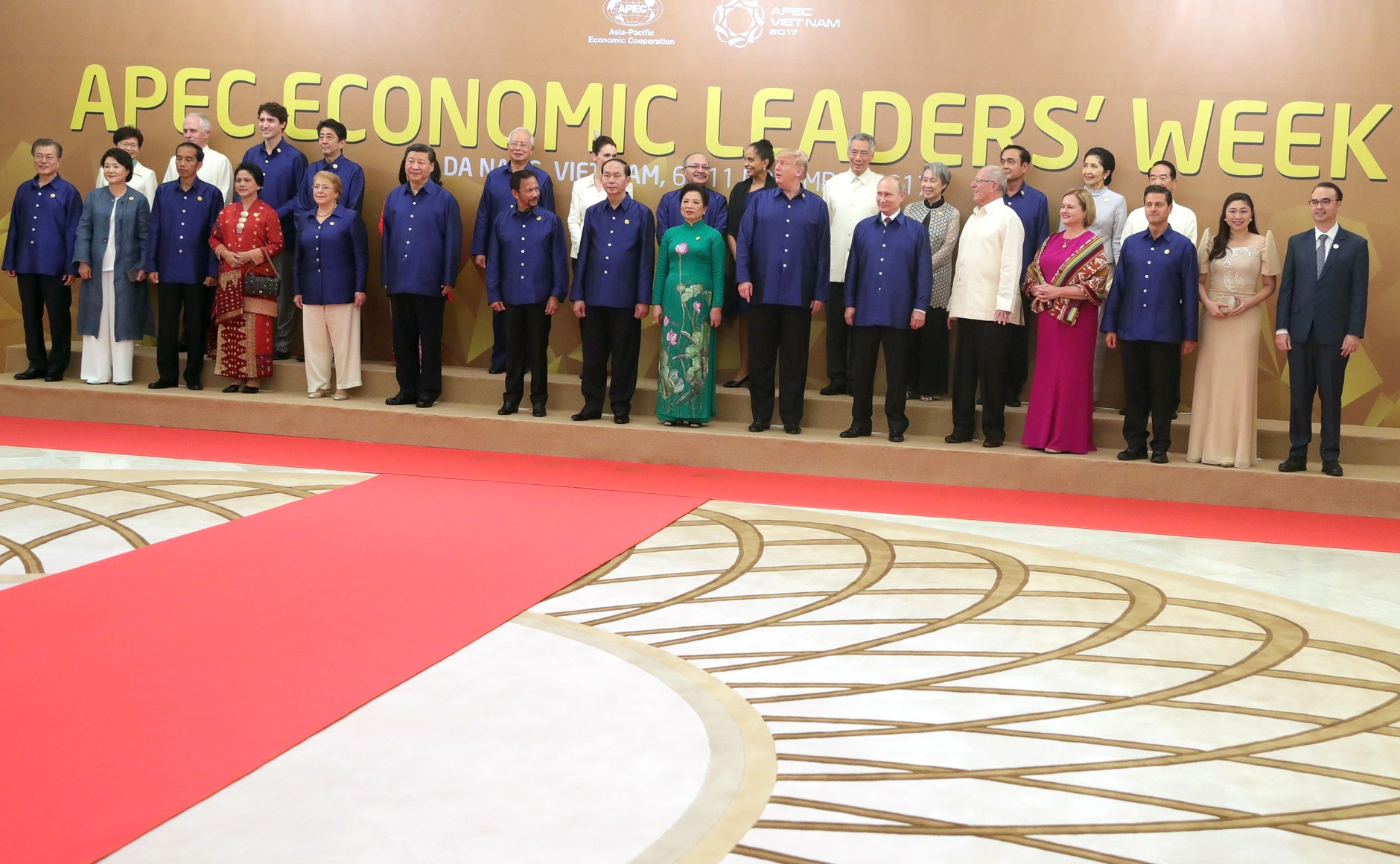
On November 19, US President Donald Trump, China’s Xi Jinping, and Russia’s Vladimir Putin will hold their first formal trilateral talks on the sidelines of the APEC summit in Shenzhen. The three have never met in this format.
The agenda is broad. Nuclear non-proliferation, the war in Ukraine, the US war in Iran, global trade, and artificial intelligence all appear on the list of discussion topics. Putin proposed the trilateral meeting during a call with Trump in October, setting in motion a gathering that no previous generation of leaders in the three capitals had attempted. Each president arrives with priorities that cut against the others’, and the format itself, three powers at one table with no allies mediating between them, leaves little room for the diplomatic hedging that bilateral meetings typically allow. The result is a summit in which every agenda item is also a battleground.
Nuclear arms control and China’s resistance
Trump wants the three leaders to discuss limiting nuclear weapons. He has insisted that China be included in any new agreement. Beijing has pushed back. It argues that its arsenal is smaller than those of the United States and Russia and that binding it to limits designed for the two largest nuclear powers would be unfair. China also believes it should retain the freedom to develop its own nuclear capabilities without external constraints. The dispute comes at a precarious moment for global arms control. New START, the last major US-Russian arms control treaty, expired in February this year, eliminating the caps that had controlled the number of nuclear weapons in the US and Russian arsenals and triggering fears of an unconstrained arms race. Trump’s push to bring China into a trilateral framework collides directly with Beijing’s position, and neither side has signaled willingness to compromise before the summit convenes. For Xi, the subject carries an additional layer of difficulty, because Washington can argue that recognition as a global leader entails acting as a responsible nuclear power, a framing that puts China on the defensive.
Ukraine without Ukrainians
Putin wanted to focus the summit on settlement of the Ukraine war without Ukrainians and Europeans present. His aim was to shape the outcome through an agreement among the three powers alone. Recent consultations on Ukraine took place in Abu Dhabi and Moscow, where Russian officials laid out positions that go well beyond battlefield terms. Putin wants profound changes to the current European order that would violate international law, demands that even parties sympathetic to Moscow have struggled to accommodate. China is not keen. Xi would prefer the war stay off the agenda entirely, and he has tried to maintain the appearance of neutrality, calling for negotiations and a political settlement while avoiding condemnation of Russia’s full-scale invasion. He is wary of discussions that could end in deadlock or expose the tension between his partnership with Putin and China’s economic ties to Europe. The United States and Europe have accused China of sending Russia components usable in the war and propping up Russia’s economy by buying oil and gas, accusations that add pressure on Beijing. Ukraine is a politically charged topic for all three leaders at the table.
Xi’s stage
Xi views the summit as a foreign policy triumph and an acknowledgement of China’s standing in the world. Hosting the leaders of the two states that Beijing once looked up to as superpowers for the better part of a century carries deep symbolic weight for a leader arguing that China’s era of subordination is over. BBC analysis notes that Xi is expected to seek a historic fourth term at next year’s Communist Party Congress, and the imagery of three-power diplomacy offers propaganda value at a difficult moment domestically. According to BBC reporting, China’s economy is grappling with a property crisis, heavily indebted local governments, slowed manufacturing, and youth unemployment affecting one in five young people.
Some commentators in Moscow see the gathering as a “new Yalta” to divide the world into spheres of influence, echoing the 1945 conference among Britain, the USSR, and the United States. Trump calls the US-China bipolar system a “G2,” a framework that would relegate Russia to the margins of global decision-making. Russia has fallen behind the US and China in technology by decades, not years. The gap is vast. It weakens Russia’s claim to equal standing at the table. Whether the summit produces results remains an open question. BBC analysis judges the meeting unlikely to yield significant outcomes, while Al Jazeera suggests that little of substance would come out but the summit may lay foundations of a new trilateral format that each leader has reason to maintain.
Sources & methods
- BBC analysis of Xi's diplomatic position, China's nuclear stance, and domestic economic challenges Archived Nov 19, 2026
- Al Jazeera opinion analysis of the trilateral summit's geopolitical dynamics and divergent agendas Archived Nov 19, 2026
- The Guardian live coverage of the APEC summit in Shenzhen and Trump's remarks before the meeting Archived Nov 19, 2026
This article draws on three published sources covering the November 19 trilateral summit: a BBC analysis of China’s diplomatic position, an Al Jazeera opinion piece on the summit’s geopolitical implications, and Guardian live reporting from the APEC meeting in Shenzhen. Facts were drawn from corroborated and single-source entries in the fact ledger; disputed claims are presented with both readings.