Ukraine sinks Russian corvette in Libyan port with naval drones launched from a mothership
The SBU confirmed seven Ukrainian-made drones struck a corvette and a cargo vessel at Benghazi, extending the war’s maritime reach 1,500 miles from the frontline into the Mediterranean.
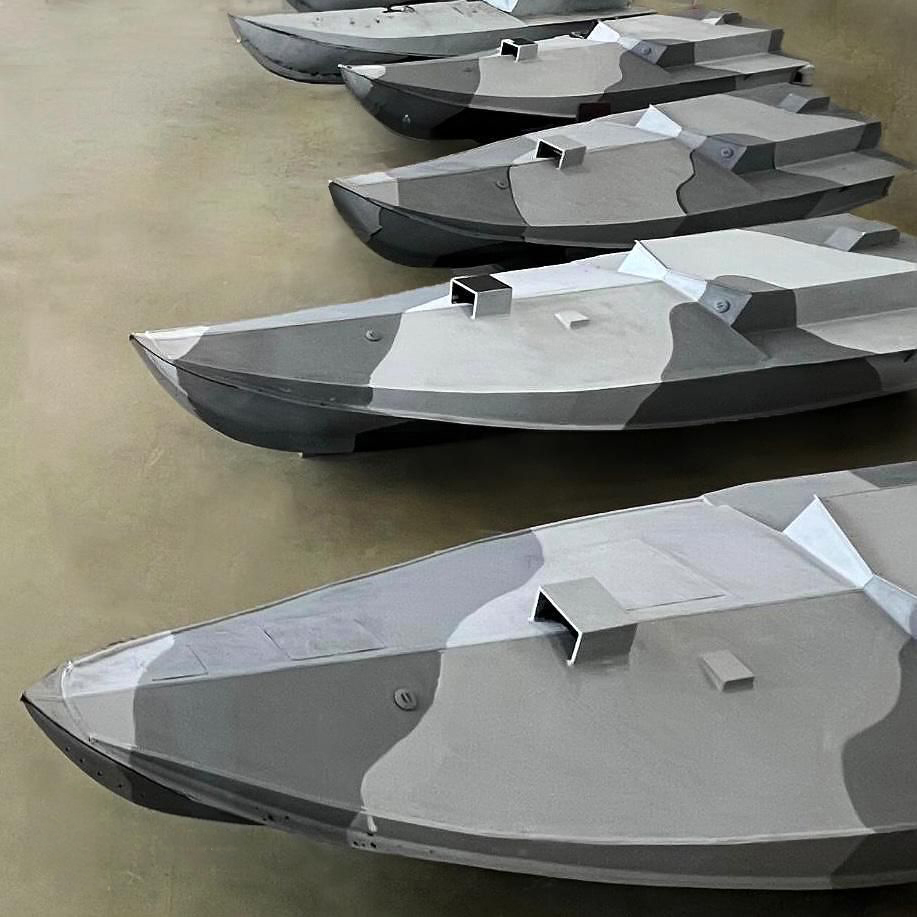
Ukraine claimed responsibility for drone strikes on two Russian vessels off Libya’s coast on Sunday, deploying seven Ukrainian-made naval drones launched from a mothership in an operation conducted 1,500 miles (2,400km) from the frontline.
The Russian corvette Merkury was struck at its berth in the Benghazi naval base and sank. Commissioned in 2023, it was one of Russia’s newest warships. A Russian Ka-27 combat helicopter was also destroyed in the attack. Zelenskyy released video footage filmed by an approaching drone showing the drones smashing into the side of the warship, triggering explosions that lit up the night sky. The second target was the MV Angara, a Russian dry cargo vessel, which Zelenskyy said was used to transport weapons. Zelenskyy described the operation as exemplary.
Satellite imagery from Planet Labs showed a boat on fire at Benghazi port at 05:47 GMT. BBC Verify geolocated social media video showing the struck ship engulfed in flames. Residents in Benghazi heard loud explosions and saw flames at the naval base early on Sunday, and civil defence units rushed to the site and extinguished the fire. The US-based intelligence firm Vantor collected high-resolution images showing the corvette moored on Saturday and capsized on Sunday. Satellite imagery showed the Merkury mostly capsized, with only its bow visible above water.
A prized vessel in a contested port
Vladimir Putin toured the St Petersburg shipyard where the Merkury was being built in 2019 and backed naming it after a tsarist-era brig that fought off two Turkish warships in 1829. At the 2023 Navy Day parade, Putin singled out the Merkury among 30 new vessels as evidence Russia was consistently building up the power of its fleet. Russian state media talked up the ship: Tass called the Merkury the newest missile corvette, while TV Tsentr claimed its stealth technology made it invisible to radar.
The Merkury had docked at Benghazi to refuel and take on supplies under a cooperation agreement between Russia and the eastern-based government in Libya. Moscow has long supported the breakaway government in Benghazi of Khalifa Haftar, commander of the Libyan National Army, to use eastern Libya as a staging post for its military presence in north Africa and the Sahel. Libya has been divided between rival governments in Tripoli and Benghazi since the overthrow of Muammar Gaddafi in 2011.
Libyan alarm and Russian deflection
The UN Support Mission in Libya (UNSMIL) expressed serious concern and called for an immediate, independent, and transparent investigation. “Libya cannot afford, and must not become a battleground for foreign conflicts,” UNSMIL stated. Libya’s eastern-based administration condemned the attack as a violation of its sovereignty, declaring that Libyan ports, territory, and territorial waters would not be turned into an arena for settling scores or exporting international conflicts. The rival UN-recognised government in Tripoli expressed concern about risks from involving civilian ports and facilities in activities linked to external conflicts. Saddam Haftar, son of Khalifa Haftar, issued a statement saying Libya’s security and sovereignty require prioritizing the national interest. Kremlin spokesman Dmitry Peskov said information on the Libya attacks would be provided by Russia’s Defence Ministry. Peskov warned Ukraine of painful consequences.
Dr Jalel Harchaoui of the Royal United Services Institute said the attack would be taken as a personal slight by Haftar and predicted a response by the Haftar family. “They will ask questions about who is hosting the Ukrainians,” he said. The health ministry in eastern Libya said it received injured people from a commercial ship targeted off the coast. It is unclear if this is the same vessel Ukraine claimed responsibility for.
A widening campaign
A day earlier, the Russian cargo ship Sparta II was struck by drones in the Gulf of Finland while bound for Kaliningrad. The vessel caught fire. It drifted into Finnish waters. All 16 crew members were evacuated, with one slightly injured. Russian authorities said two drones hit the Sparta II in international waters. Finnish defence forces assessed Ukraine was likely behind the attack, though Kyiv has not publicly commented. In March, a Russian LNG tanker was attacked off Libya’s coast and Moscow blamed Ukraine. The Libya attack occurred less than a week after damage to the Kerch bridge linking Russia to occupied Crimea.
The SBU said the operation demonstrated that the Russian military fleet and its logistics have no safe routes even far beyond the Black Sea. “Such unique special operations destroy the enemy’s logistical capabilities and force Russia to pay for aggression even at a strategic distance from Ukraine,” the SBU said via Telegram. Zelenskyy said Ukraine would continue operations in designated waters in response to Russia’s aggression. Alexey D Muraviev, an academic at Edith Cowan University, said the Mediterranean has firmly become an external theatre of maritime operations, and that the targeted vessels were likely transporting military equipment to support Russia’s Africa Corps. He warned the Gulf of Finland is an area where a possible clash between Russia and NATO is quite possible.
Sources & methods
- BBC News, reporting from London with BBC Verify geolocation and satellite imagery analysis Archived Nov 23, 2026
- The Guardian, reporting from Kyiv with additional reporting by Pjotr Sauer Archived Nov 23, 2026
- Al Jazeera, compiling accounts from Libyan, Russian, and Ukrainian sources Archived Nov 23, 2026
- CNBC, reporting on SBU and Zelenskyy statements via social media and Telegram Archived Nov 23, 2026
This article synthesizes reporting from four news organizations covering the November 23, 2026, statements by Ukraine’s SBU and President Zelenskyy, corroborated by satellite imagery from Planet Labs PBC, high-resolution images collected by Vantor, and video geolocated by BBC Verify. Direct quotes are drawn from verified social media posts, Telegram statements, and on-the-record interviews conducted by the cited news organizations, including BBC’s interview with Dr Jalel Harchaoui of RUSI and Al Jazeera’s interview with Alexey D Muraviev of Edith Cowan University.