UN warns Ebola outbreak in DRC is growing faster and wider as death toll surpasses 2,500
The epidemic in the Democratic Republic of the Congo remains out of control amid armed conflict, funding shortfalls, and attacks on health workers, with no licensed vaccine for the Bundibugyo strain driving the crisis.
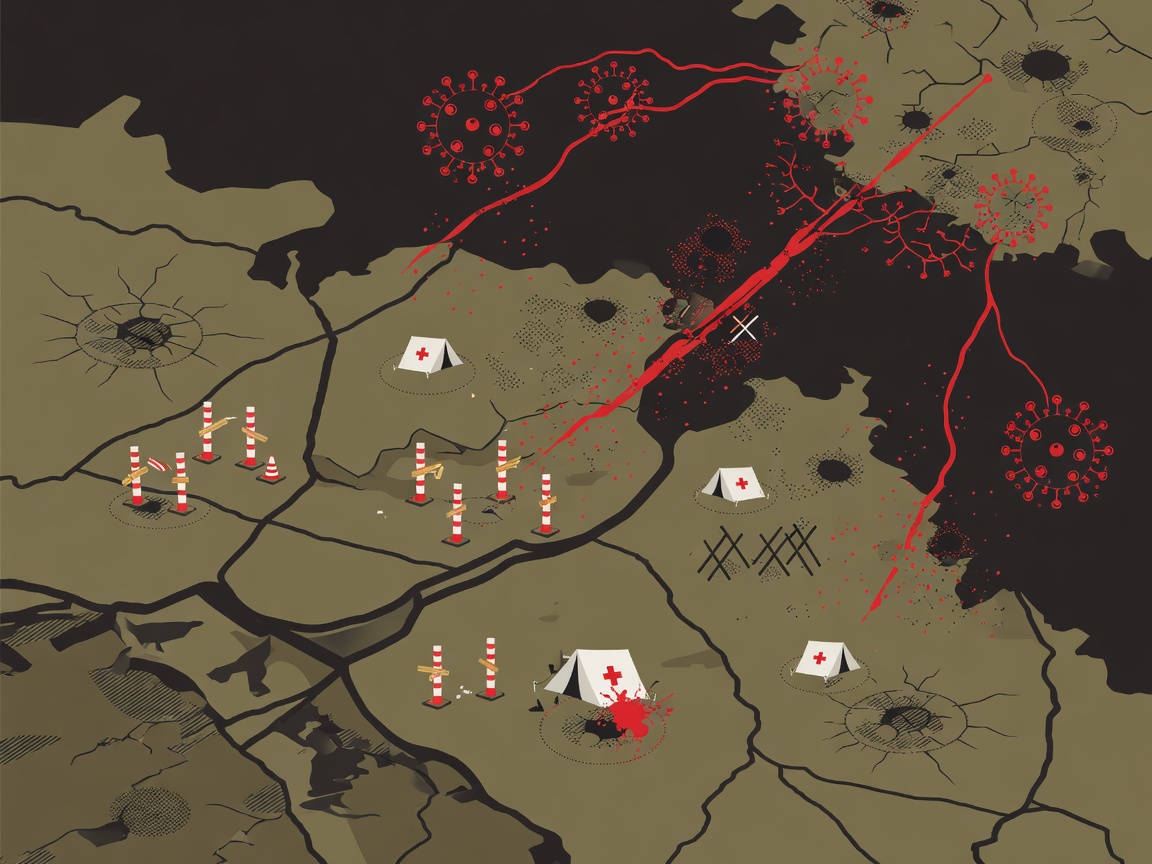
The United Nations warned that Ebola is spreading “exponentially” in the Democratic Republic of the Congo. More than 2,500 people have died. The outbreak is growing faster and wider than ever before, according to the UN’s Senior Ebola Coordinator Julien Harneis, who reported the death toll and called for urgent funding as the existing pool of money will run out within weeks. The epidemic, driven by a rare strain with no licensed vaccine, remains out of control amid armed conflict, funding shortages, and attacks on health workers, and Harneis warned it could spread to neighbouring countries without a ramped-up response.
The figures make this the biggest and most deadly Ebola outbreak in the DRC’s history, according to The Guardian. There have been almost 5,000 cases since the outbreak was declared on 15 May, though it is thought to have been spreading unreported for months before that. Dr Jean Kaseya, director general of the Africa Centres for Disease Control and Prevention, said at a press briefing in mid-August that the outbreak is on course to be “the largest one in the world.”
The Bundibugyo strain causing the outbreak is a rarer type of Ebola. It has no licensed vaccine or medicine. That leaves health workers reliant on painstaking efforts to identify cases, isolate them, and trace their contacts. But in Ituri and North Kivu, the provinces with the highest numbers of cases, armed conflict has displaced tens of thousands of people, and officials have been unable to identify enough contacts to get on top of transmission. Africa CDC estimates the response is tracing about 12% of contacts. The target is 95%.
More than 260 attacks on health workers have been reported in the past six months. Eight health workers have been killed. More than 160 healthcare workers have fallen ill, with 43 dying. Where health workers and facilities are able to operate, they have come under attack by frustrated and frightened locals, Harneis said. Aid workers say many locals believe conspiracy theories that the outbreak is a hoax, and have reacted angrily when health restrictions prevent them from personally burying loved ones.
The missing and the mistrust
As of 15 August, there had been 4,945 confirmed cases, with 730 people in treatment centres, 1,040 survivors, and 2,325 deaths, according to The Guardian. That leaves 850 people who have tested positive but are unaccounted for. People who have the virus but whose whereabouts are unknown represent a high risk of onward transmission. In the hardest-hit areas, many locals have extremely little trust in the authorities, asking why the government is suddenly present when communities had been struggling alone before, including with other diseases such as cholera and malaria.
Mistrust translates into infected people coming forward for treatment late, if at all. Some flee Ebola treatment centres. Some families prefer to care for their loved ones at home, and if they die, to follow their usual burial practices that involve touching the bodies. Ebola is spread through body fluids, and carers without proper protective equipment face a high risk of infection. The case-fatality rate, the proportion of people testing positive who die, stood at 47% as of 15 August, and it has risen in recent weeks.
Money, medicine, and a new strategy
Funding remains a critical bottleneck. Africa CDC says $518m is needed for the direct health response to Ebola, and another $882m to tackle surrounding humanitarian issues. Donors including the US, the EU, African Union member states, the World Bank, and its Pandemic Fund have pledged more than enough to cover that amount. But not all the funding has been released. WHO director general Dr Tedros Adhanom Ghebreyesus said last week that only $264m of the $518m had been disbursed. Getting ahead of the outbreak, he warned, “depends on financing.”
The availability of cash has been a real issue on the ground. The airport in Bunia, the provincial capital of Ituri, has been closed to commercial flights for months, making it harder to bring money in. In remote areas, there are no banks and mobile money systems are unavailable, according to Prof Yap Boum of Africa CDC. Some staff, including nurses and the teams in charge of safe burials, have gone on strike over the lack of pay, saying they “see no point in risking our lives” without compensation.
Authorities are now switching to a new approach. Teams will go door to door to seek people with symptoms, and people in every village will be appointed to be part of the response effort. The new strategy will need more workers and will probably be more expensive than the approach up to now. WHO officials hope the renewed focus will reverse the spread of the disease within three months, though the outbreak will not be over by the start of December.
There has been progress on the medical front. Testing is now available in labs in Ituri, rather than requiring samples to be sent to Kinshasa for confirmation. Safety trials have begun of two vaccines designed specifically to protect against the Bundibugyo strain. New evidence suggests that an existing Ebola vaccine called Ervebo, designed to fight the Zaire strain, may offer enough cross-protection against Bundibugyo to cut death rates, even if it does not prevent infection. Officials are planning to roll it out on that basis. Trials have also begun on drugs both as treatment and as prophylaxis for people exposed to Bundibugyo patients.
Harneis said all of this is happening in an area that has had three decades of conflict and is generating huge humanitarian needs. He urged more staffing and resources to reach remote areas. On 23 August, it will be 100 days since the Bundibugyo strain was first reported.
Sources & methods
- Al Jazeera report on the UN warning that the Ebola outbreak in the DRC is growing faster and wider, with the death toll passing 2,500, citing Senior Ebola Coordinator Julien Harneis on attacks, funding, and conflict. Archived Aug 21, 2026
- The Guardian report addressing five key questions about the outbreak, including case and death figures, unaccounted-for patients, funding gaps, vaccine and treatment trials, and the new door-to-door response strategy, citing WHO and Africa CDC officials. Archived Aug 21, 2026
This article was compiled from reports by Al Jazeera and The Guardian, drawing on statements by UN Senior Ebola Coordinator Julien Harneis, WHO director general Dr Tedros Adhanom Ghebreyesus, Africa CDC director general Dr Jean Kaseya, and Africa CDC’s Prof Yap Boum.