US forces strike Iranian launchers on Larak Island in first known attack since late July
The attack marks the first publicly acknowledged American strike on Iranian positions in weeks, with Tehran vowing retaliation as the war enters its seventh month.
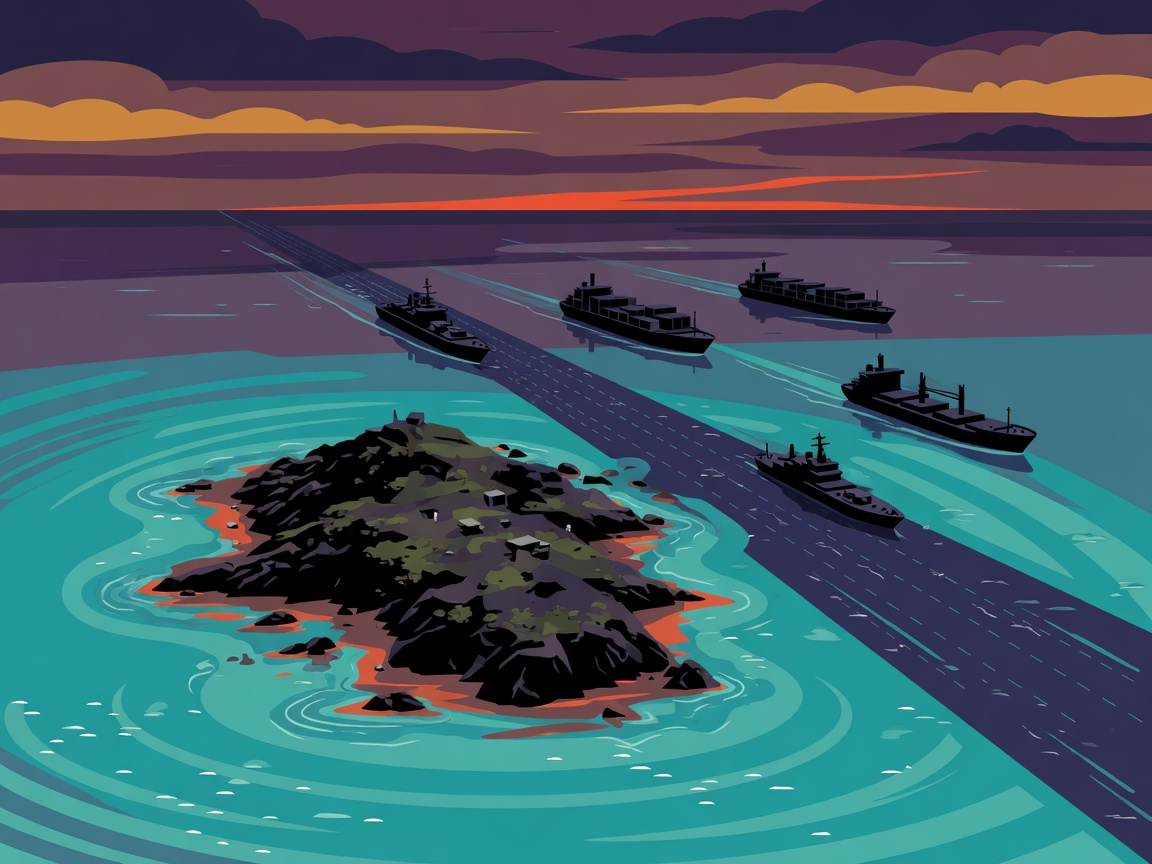
US forces struck two Iranian rocket launchers on Larak Island on Sunday, marking the first known American attack on Iran since late July, as the war between the United States, Israel, and Tehran entered its seventh month.
The strikes came after Islamic Revolutionary Guard Corps forces were observed preparing to launch rockets carrying sea mines into the Strait of Hormuz, according to US Central Command spokesman Cdr Tim Hawkins. “Last week, CENTCOM completed clearing sea mines from the strait’s international shipping routes,” Hawkins said. “U.S. forces are monitoring the area closely and remain prepared to protect the free flow of commerce through this essential waterway.”
Iran confirmed casualties. The IRGC said in a statement that the attack by what it called the “American-Zionist enemy” resulted in the killing and injuring of several soldiers, and vowed to respond and punish the aggressor. Iran’s Tasnim news agency, which is affiliated with the IRGC, reported that the attack was carried out by drones and that two people were killed and two others injured. Fars News Agency had earlier reported explosions heard near the island. The IRGC spokesperson, identified by the BBC as Hossein Mohebbi, called the attack a “strategic and fatal mistake” and warned of consequences for what he described as a miscalculation, both economically and militarily.
Larak Island sits just offshore from the key port of Bandar Abbas, right on the Strait of Hormuz, a vital waterway for global shipping. Some 20 percent of the world’s oil and liquefied natural gas used to travel through the strait before the war began. The US and Israel launched wide-ranging strikes on Iran on 28 February. Iran responded by attacking Israel, US bases, and allied states in the Gulf, and effectively closing the Strait of Hormuz to marine traffic. The war has sharply disrupted vessel traffic through the strait.
From bombing to sanctions
Trump paused the campaign in late July. The US has since shifted from a bombing campaign to a financial pressure strategy, but the Sunday strikes risk renewing the military confrontation and show that Washington remains willing to use military force despite the focus on sanctions. On 24 August, Washington announced a fresh sanctions campaign aimed at further isolating Tehran and expanding secondary sanctions against countries and companies that do business with Iran. Iranian officials and state media have largely dismissed the campaign as a continuation of previous US economic measures, which they argue followed Washington’s military failure in the recent conflict. Pentagon chief Pete Hegseth has warned that the US is still prepared to use military force if needed. Trump said last week that all mines placed in the Strait of Hormuz by Iran had been detonated or removed, and warned that any ship or boat deploying new mines would be destroyed. Iran’s Deputy Foreign Minister Kazem Gharibabadi dismissed Trump’s claim as a “propaganda” deception. Iran has maintained that the strait remains closed. Attacks on ships in Hormuz have been reported almost daily, and Iran is currently making tanker traffic pass by Larak Island for checking and reportedly forcing vessels to pay $2m to cross.
Economic pressure and political stakes
US officials have been arguing that Iran is on the verge of economic collapse due to sanctions and the military blockade against its ports, while touting what they describe as Iran’s loss of control over Hormuz. In recent weeks, the US has claimed control over the strategic waterway, saying it is managing to get millions of barrels of oil through the strait under its military protection even as Iran maintains the blockade. Iran’s Foreign Minister Abbas Araghchi dismissed reports that the US is managing to get large amounts of oil through the waterway, accusing Israel-aligned actors of also promoting war with rosy assessments. “Our intelligence shows major efforts to game energy markets,” Araghchi wrote on X, accusing US government elements of using gullible media to influence prices for personal gain. He said American consumers feel the real bottom line.
Oil prices have remained high amid supply uncertainty. The average price of one gallon of petrol in the US is still more than $4, up from less than $3 when the US and Israel launched the war late in February. Energy prices are fueling inflation. That could hurt Trump’s Republican Party’s chances of maintaining control of Congress in the midterm elections in November.
Tehran remains defiant. The government stresses it is prepared for a long conflict, and Iran has previously responded to similar US attacks by launching missiles and drones at military bases hosting US troops in neighbouring countries.
Sources & methods
- BBC News report on the US strikes, IRGC casualties, Tasnim and Fars agency reports, Mohebbi statement, sanctions background, and war timeline. Archived Aug 30, 2026
- Al Jazeera report confirming the strikes, IRGC statement on casualties, Araghchi's remarks on X, economic impact on US petrol prices, and political stakes for November midterms. Archived Aug 30, 2026
- CNBC report carrying US Central Command's confirmation and full Hawkins quotes on mine-clearing operations and monitoring of the strait. Archived Aug 30, 2026
Compiled from US Central Command statements, Iranian state media reports, and official remarks as reported by BBC, Al Jazeera, and CNBC on 30 August 2026.