Volcanic eruption of Anak Krakatau halts eight Indonesian airports and strands passengers
Ash clouds from the Sunda Strait volcano rose to 50,000 feet, disrupting international and domestic flights across Java and Sumatra.
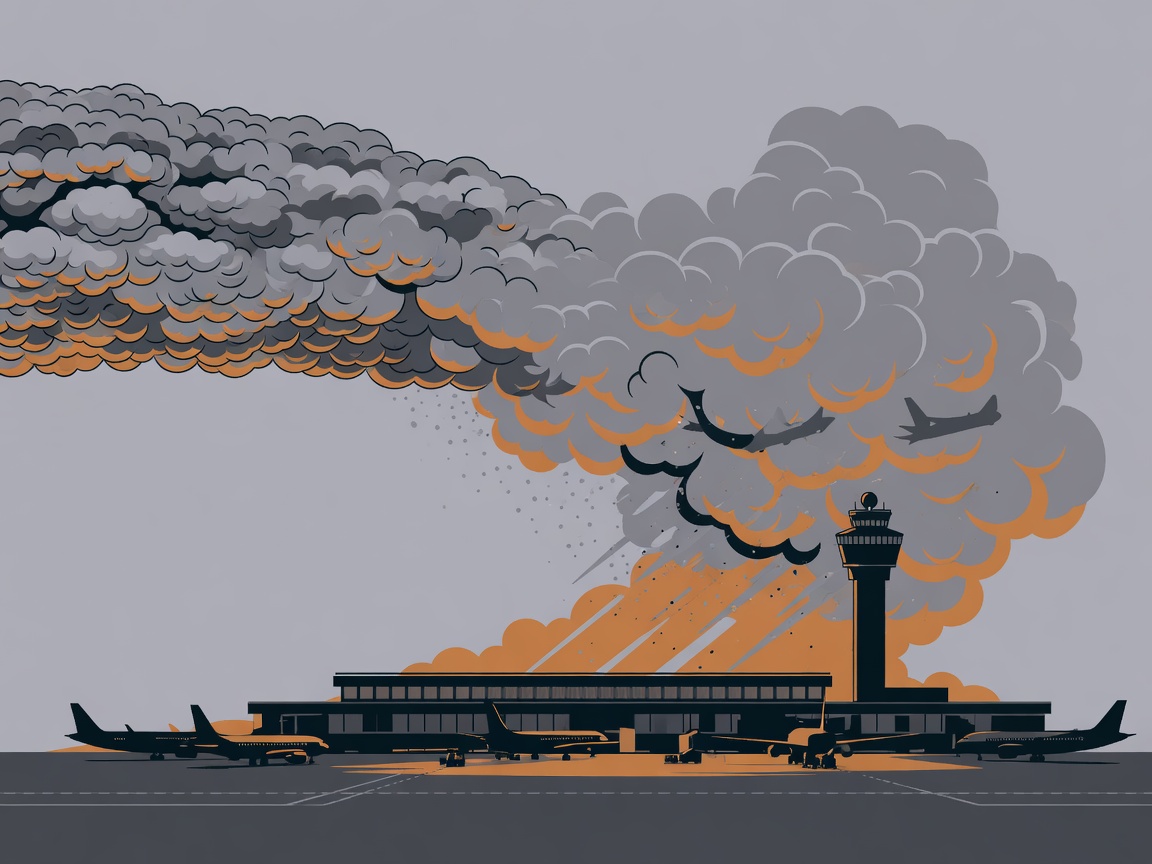
A volcanic eruption of Anak Krakatau forced Indonesian authorities to suspend operations at eight airports on Sunday, including Jakarta’s main international hub, stranding passengers across one of the world’s busiest aviation corridors as ash clouds rose to 50,000 feet over western Indonesia.
The volcano began erupting late on Friday night, generating continuous seismic activity, lava fountains, and booming sounds heard up to 435 miles away, according to Indonesia’s geology agency. Two more eruptions followed on Sunday.
Jakarta’s Soekarno-Hatta International Airport was the first to close on Sunday morning after ash was detected in nearby airspace. The airport operator, Angkasa Pura, said the suspension affected hundreds of flights, including international ones. Authorities announced several extensions of the shutdown, keeping the airport closed until 9.30pm local time on Sunday, the Guardian reported. The transport ministry said airports would remain closed until midnight, according to the BBC.
The scale of the disruption was significant. The BBC reported that around 170,000 passengers were left stranded and 1,558 flights delayed. The Guardian, citing the transport ministry, reported that more than 22,000 passengers and 209 flights were affected. The two outlets offered different figures, but both described widespread cancellations across international and domestic routes.
The transport ministry said the pause mainly affected flights to and from Singapore, as well as other international routes including Doha, Sydney, and Kuala Lumpur. Singapore Airlines cancelled flights to and from Jakarta for the rest of Sunday. Qantas reported disruptions to several services, including cancellations to and from Jakarta. “Safety remains our highest priority,” the airline said in a statement reported by the Guardian. “We have contacted affected customers and are providing assistance. Services will resume when conditions allow.” At least 16 domestic flights to Bali were cancelled, local airport authorities said.
Ash spreads across Java and Sumatra
Ash reached as high as 6,000 meters on the Java side of the volcano and 15,000 meters on the Sumatra side and parts of Banten province, the meteorological agency BMKG said. Transport Minister Dudy Purwagandhi said the decision to close additional airports came after tests confirmed volcanic ash had spread toward West Java.
Volcanic ash threatens aircraft. It can damage jet engines by baking onto hot internal parts and rapidly wearing out turbine blades, as well as clogging fuel and air systems. It can also damage pilots’ windscreens, the Guardian noted.
The health minister urged residents in affected areas to stay indoors and wear face masks to protect against respiratory, eye, and skin risks. Several schools cancelled activities on Saturday after students and residents reported eye irritation, according to the local newspaper Kompas. Some fishermen cancelled trips to sea, also citing sore eyes.
One resident, Aldi Candra Prayogi, told Kompas that since Friday evening it felt like “small grains of sand had gotten into my eyes,” and that he needed eye drops to ease the irritation. The dust was so thick, he said, that he had to sweep his front yard every five minutes.
Authorities respond
The disaster mitigation agency BNPB said it would conduct a weather modification operation, which could include cloud-seeding to promote rain. “If it rains heavily enough, the volcanic ash that has been disrupting our daily lives since yesterday and continuing today will be washed away quickly,” BNPB chief Lt. Gen. Suharyanto told a press conference, according to the Guardian.
Purwagandhi urged airlines to speed up refund processes for affected passengers and to provide timely information to those with upcoming flights to avoid overcrowding at airports. Port authorities prohibited ships from passing within a two-mile radius of the volcano and told vessels to remain vigilant. There was no tsunami warning.
Anak Krakatau, which means “child of Krakatau,” sits in the Sunda Strait between Java and Sumatra. The volcano has a violent history. It has been sporadically active since it emerged from the sea in the caldera formed after the 1883 eruption of Mount Krakatau, one of the deadliest and most destructive volcanic eruptions in human history, which killed about 35,000 people. In December 2018, the volcano collapsed, triggering a tsunami that killed over 400 people and displaced and injured thousands more on the coastlines of Sumatra and Java. Scientists found that some rock chunks from the collapse were 70 to 90 meters high. Indonesia sits along the Pacific Ring of Fire, a 40,000-kilometer string of volcanoes, earthquake sites, and tectonic plates stretching from the southern tip of South America to New Zealand. Roughly 90 percent of all earthquakes occur along the ring, which is dotted with 452 active volcanoes, 75 percent of the world’s total.
Sources & methods
- BBC report on the Anak Krakatau eruption, passenger figures, flight delays, health warnings, and the volcano's history Archived Sep 6, 2026
- Guardian report on airport closures, airline responses, ash altitudes, BNPB weather modification plans, and Pacific Ring of Fire context Archived Sep 6, 2026
This article was compiled from two published reports on the eruption, with figures cross-referenced between sources where they differed.