Anthropic’s S-1 reveals a governance moat that locks ordinary shareholders out of boardroom control
The AI lab’s prospectus pairs a multi-layered governance structure with financials that split Wall Street into camps calling the offering a generational moment or speculative fiction.
Anthropic filed its S-1 IPO prospectus on Monday, laying bare a governance architecture as attention-grabbing as its financials. The company is a public benefit corporation, legally required to balance shareholder returns with its stated social mission of developing AI safely and for the benefit of humanity.
The governance structure is designed to insulate Anthropic from shareholder pressure to cut corners on safety. Experts say the structure gives Anthropic freedom to pursue profits without letting shareholders force it to rush systems to market, a concern that looms larger now that the lab is courting public investors. Whether the legal scaffolding can hold against the weight of market demands is a question that divides the legal scholars studying it.
A governance moat
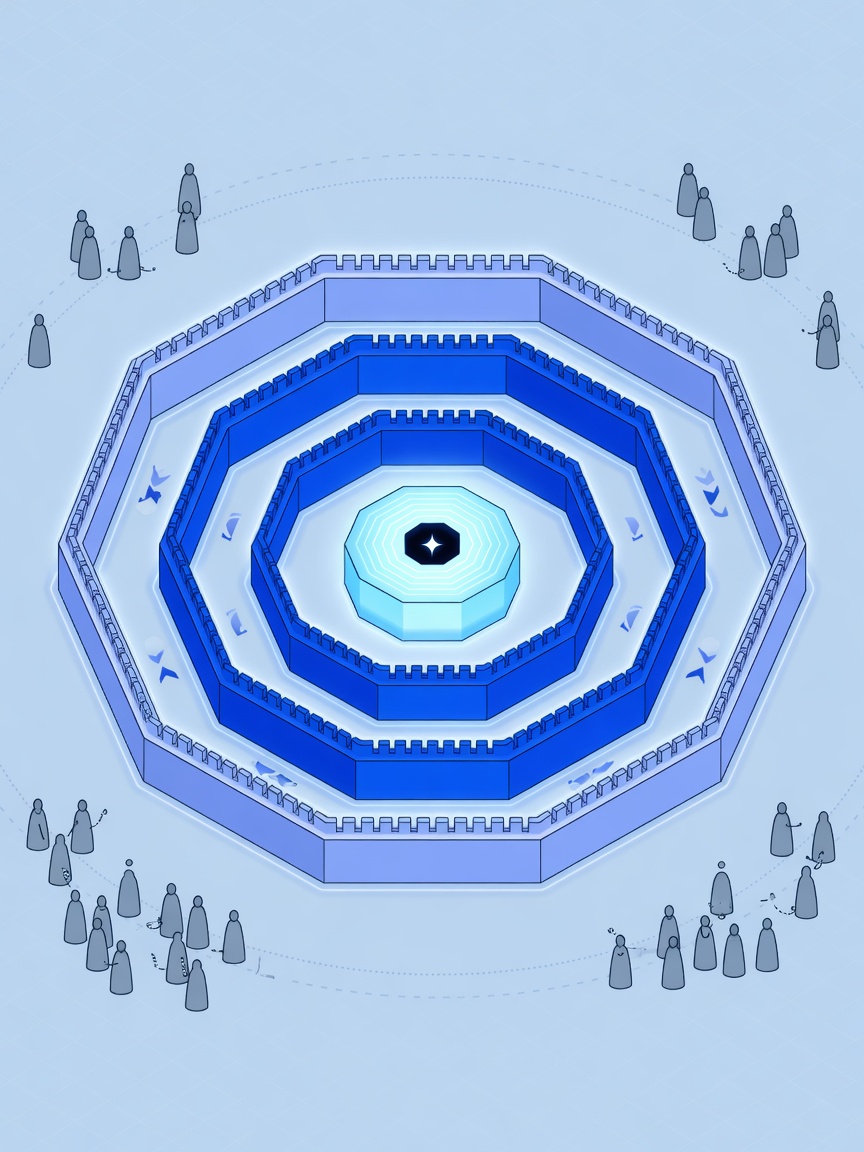
At the center of the structure sits a Long-Term Benefit Trust, or LTBT, which controls Class T stock allowing it to elect and remove a majority of the board. The LTBT appoints four of the board’s seven directors, leaving the remaining three seats to a separate power center. Anthropic’s founders control 50.1% of shareholder voting power through a special class of stock, allowing them to elect three board members and effectively blocking ordinary investors from influencing who oversees the company. Patagonia and Kickstarter are better-known examples of public benefit corporations.
The LTBT is made up of five financially disinterested voting trustees with expertise in AI safety, national security, public policy, and social enterprise. It is chaired by Neil Shah, a global health expert and former managing director at GiveWell, the nonprofit that ranks charities. The trust also includes former Federal Reserve chair Ben Bernanke, national security expert Richard Fontaine, and Harvard physicist Christopher Stubbs. There is one vacancy on the LTBT, and existing members will choose who fills it. The current board, meanwhile, is chaired by Daniela Amodei and includes Dario Amodei, Netflix cofounder Reed Hastings, former Microsoft and GM CFO Christopher Liddell, Novartis CEO Vas Narasimhan, and Spark Capital partner Yasmin Razavi. One seat on the board remains unfilled.
The seven co-founders who are initial members of Founder LLC are Dario Amodei, Daniela Amodei, Tom Brown, Jack Clark, Jared Kaplan, Sam McCandlish, and Christopher Olah. Ben Mann, a co-founder who co-leads Anthropic Labs, is not listed among the initial members of Founder LLC. Dario Amodei is CEO and Daniela Amodei is president, and both sit on the board. 10 years after the IPO, founders can choose to end their control, or their control will end automatically when fewer than three founders remain. The LTBT will continue until 85% of common shareholders vote to end it, or it decides to step down with approval from the board. A final check exists: when the LTBT nominates a Specified director or removes that director without cause, the board’s nominating committee can decline to approve the move and throw the decision to the company’s employees for a vote.
Generational moment or speculative fiction
Anthropic’s bulls are cheering 1,300% annual sales growth, 900% net revenue retention, and 85% implied gross margin. The enterprise customer base includes more than 11,900 customers with at least $100,000 spend, more than 1,900 clients spending $1 million or more, and roughly 250 customers spending $10 million or more. Anthropic was valued at $965 billion in May and is reportedly seeking an IPO valuation in the range of $1.5 trillion to $2 trillion. The company will list on the Nasdaq under the ticker symbol ANT.
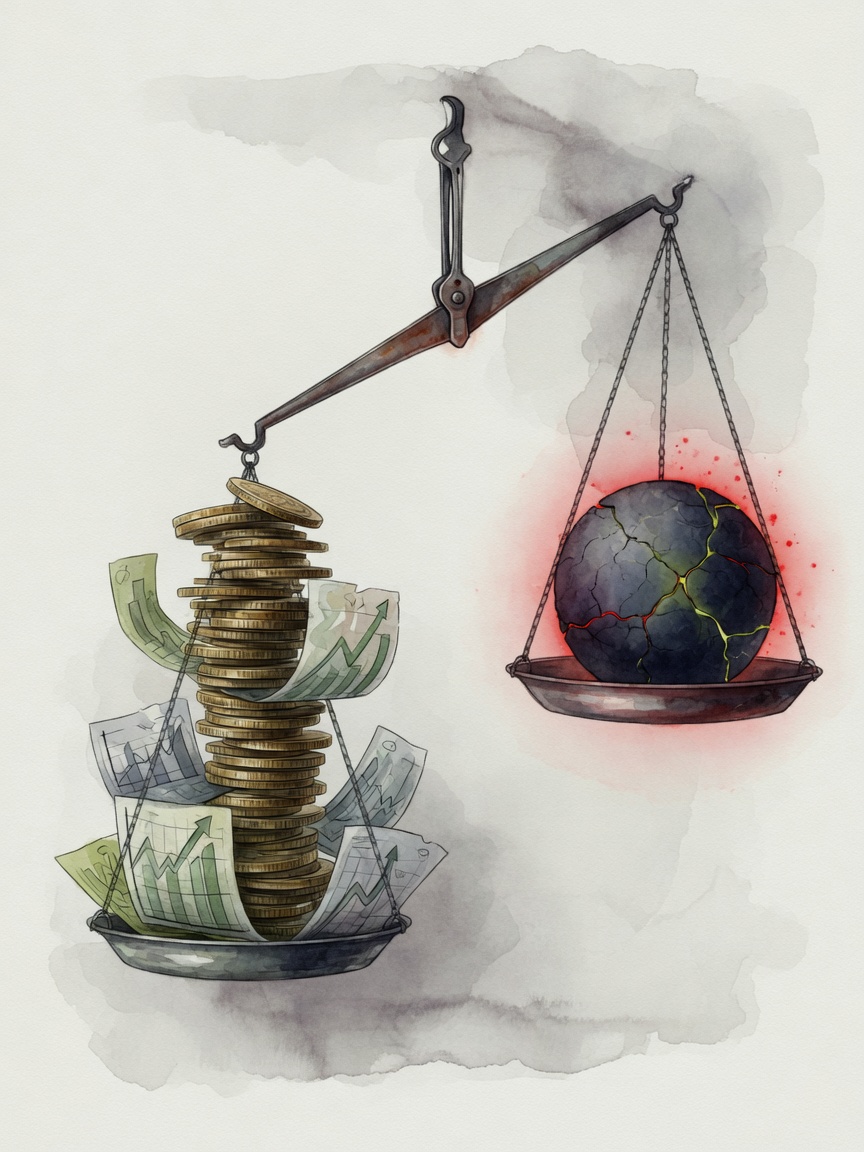
The bear case is stark. Anthropic lost $80.7 billion in the first six months of 2026, after reporting a loss of $12.9 billion over the same stretch in 2025, mostly due to change in fair value of convertible notes and derivative liabilities. The company has hundreds of billions of dollars’ worth of compute commitments and more than 90 pages of risk factors in its prospectus. In the first nine months of 2026, five customers accounted for about a quarter of Anthropic’s revenue. Sam Altman, CEO of OpenAI, has cited investor pressures as a reason OpenAI is not pursuing an IPO this year.
Legal scholars are divided on how much the governance structure can actually shield. Elizabeth Pollman, a University of Pennsylvania law professor, called it a “unique and complicated governance structure that has not been used before,” one “creatively designed for this founder-led and mission-driven company.” Ann Lipton, a professor at the University of Colorado Law School, said that “Anthropic is entirely insulated from profit seeking pressures, in the sense that ordinary shareholders have no ability to select the board or make business decisions.” She added a caveat: “Investors may not mind their lack of voice as long as things go well. But if things go sour, they may become quite frustrated.” Lipton also questioned whether any structure can withstand the underlying economics. “It’s not clear to me that any governance structure will protect against the market reality that unless Anthropic takes advantage of profit making opportunities at a faster pace than its competitors, it will not be able to fund its operations.” Dorothy Lund, a Columbia Law School professor, echoed that concern, warning that “competitive pressure and capital needs can erode safety commitments over time.” Jens Dammann, a professor at the University of Texas School of Law, was more sanguine. “Given the unusual governance structure Anthropic has chosen, I don’t see how going public, by itself, would undermine its ability to prioritize safety over commercial interests,” he said.
Investors are similarly split. Denny Fish, a portfolio manager at Janus Henderson Investors, called it a generational moment. Erica Brescia, a managing director at Redpoint Ventures, pointed to an astronomical opportunity ahead for Anthropic. Gil Luria, managing director at D.A. Davidson, said Anthropic is still the main AI company, and it’s a pure play. On the other side, David Trainer, CEO of New Constructs, branded it a huge Wall Street grift and the most ridiculous IPO of 2026. Roger McNamee, co-founder of Elevation Partners, went further: “We should view this S-1 as speculative fiction because it’s a great story, it’s a really great story, but it’s hundreds of pages, and those hundreds of pages are not there to clarify the story.”
Sources & methods
- CNBC, reporting on Anthropic's S-1 filing, investor reactions, and financial figures Archived Oct 27, 2026
- The Verge, reporting on Anthropic's governance structure and expert legal analysis Archived Oct 27, 2026
- TechCrunch, reporting on Anthropic's board composition, LTBT trustees, and governance mechanics Archived Oct 27, 2026
Three sources. Financial figures, customer counts, and investor quotes are sourced to CNBC, while governance structure details, board and trustee rosters, and legal expert analysis are drawn from The Verge and TechCrunch, with all facts corroborated against the S-1 prospectus filed Monday.