Alberta voters reject separation referendum in decisive victory for national unity
Prime Minister Mark Carney hailed the result as separatist leaders vowed to continue their push and signaled plans to challenge Premier Danielle Smith’s leadership.
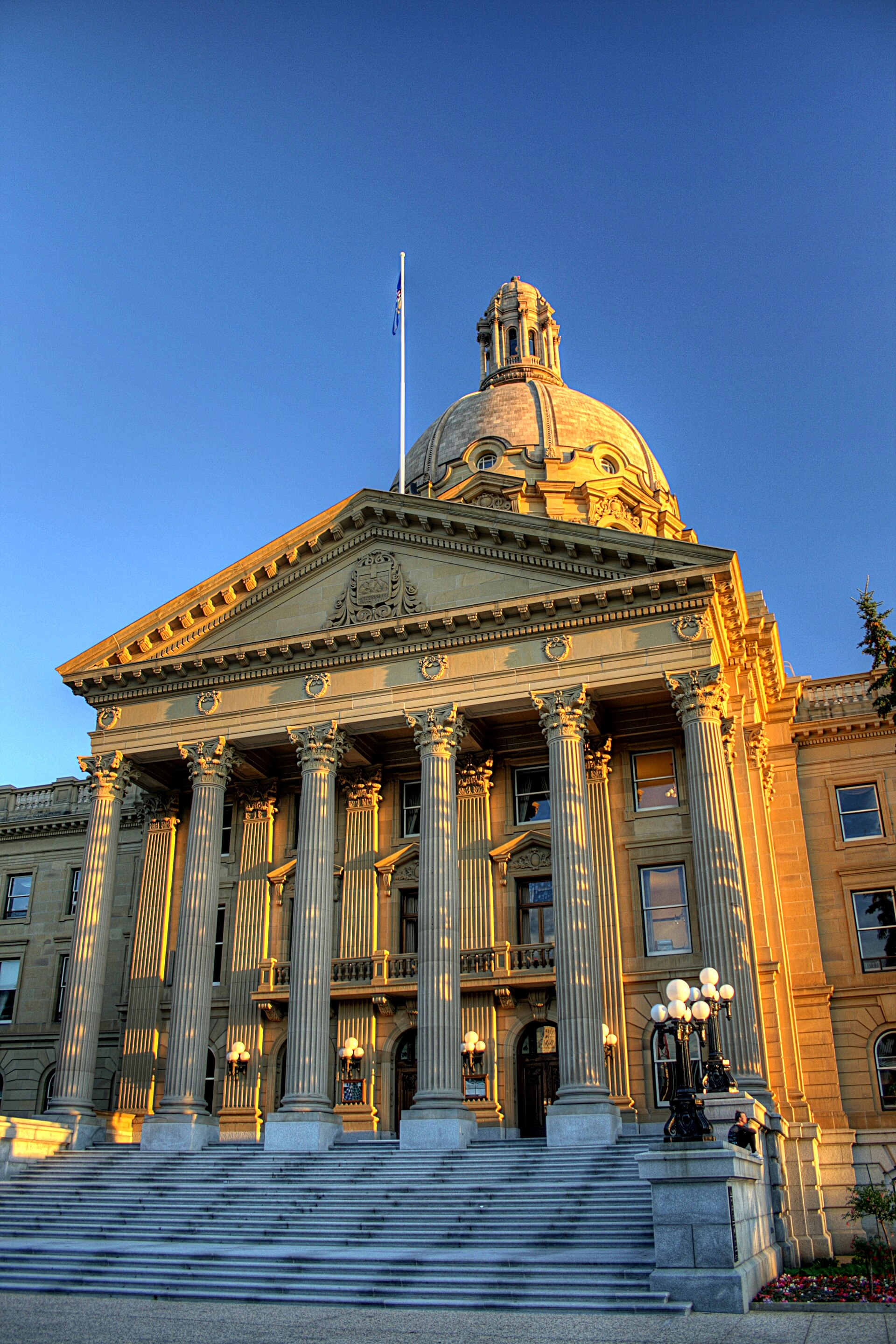
Alberta voters decisively rejected separation from Canada in a referendum held Monday, with approximately 76% supporting remaining and close to 24% backing a process toward leaving.
Prime Minister Mark Carney said he was thrilled that Albertans had chosen unity. “Albertans made a clear choice. They chose unity, to build together, and to take care of each other. Above all, Albertans chose Canada.” Separatist leaders indicated they would continue their push regardless of the result.
More than 1.5 million votes were counted, according to unofficial results from Elections Alberta. CBC News called the result after 48% of ballots counted showed the remain side with a commanding lead. Roughly 43% of eligible voters — 1.3 million Albertans — had already cast advance or mail-in ballots before Monday, pointing to potentially higher turnout than the province’s last referendum in 2021. Delays at roughly 100 of 1,400 polling stations pushed results back by more than two hours. Calgary mayor Jeromy Farkas, a staunch opponent of independence, said the city’s best future was as a Canadian city.
Carney, who grew up in Edmonton, Alberta’s capital, warned during the campaign that “a vote against Canada is a dangerous bluff that will lead to years of deep uncertainty and lost opportunities for Albertans and Canadians.” Conservative leader Pierre Poilievre, whose parliamentary seat is in the province, told supporters that Canada is more than a government, describing it as a people, a flag, a land, a history and a promise, and urging Albertans not to use the referendum to punish the federal government. On Tuesday morning, Carney told reporters he had spoken to Smith and discussed moving forward in the spirit of cooperative federalism, including on issues of immigration and other common priorities.
Smith welcomed the results. “Albertans have voted for a stronger Alberta in a united Canada,” she said. She had said before the vote that if voters chose to remain, a referendum on separation would not be held while she was in power.
What was on the ballot
The ballot included 10 questions, with the separation question being one of them; others covered immigration, healthcare, education and the province’s constitutional powers. Smith called the vote in response to a public petition that gathered about 300,000 signatures. That petition was blocked by a judge for failing to consult First Nations people, but Smith went ahead with the ballot anyway. Another group collected more than 400,000 signatures on a separate petition opposing separation.
Alberta is an oil-rich province with a population of 5.1 million, holding massive oil deposits and reserves of critical and rare-earth metals. Separatist movements in the province go back to the 1940s, following the discovery of oil reserves, and some factions even support Alberta joining the United States. Canada is facing a trade war with the United States. Researchers have pointed to possible online influence campaigns by Russian and US entities that amplified calls for separation and shared misleading information, and Smith told media in August that the activity was under observation. First Nations groups turned out in strong numbers to vote remain, with one southern Alberta polling station in an area home to the Siksika Nation temporarily running out of ballots.
Canada has grappled with challenges to its unity before. The province of Quebec held two referendums on independence, in 1980 and 1995. Both were unsuccessful.
Separatists vow to fight on
Jeffrey Rath, a Calgary-based lawyer and separatist leader, vowed that the movement would press on. “Our movement isn’t stopping and we’re continuing to move forward,” he said. Keith Wilson, a leader of the separatist movement, said that at least a quarter of Albertans feel the province needs to be treated better. Mitch Sylvestre, another separatist leader, said “a lot of work will have to be done” to curb the appetite for independence. Separatist leaders plan to push Smith out of power within her United Conservative Party to install a leader more sympathetic to their cause. The referendum became a political liability for Smith’s party, whose popular support has tumbled, including the loss of a conservative stronghold in a byelection. Smith’s tenure as UCP leader is due in large part to separatists who ousted her predecessor, Jason Kenney.
Sources & methods
- BBC News, reporting on the Alberta referendum results and reactions from separatist leaders Archived Oct 20, 2026
- The Guardian, reporting on unofficial Elections Alberta results and statements from Carney, Smith, and others Archived Oct 20, 2026
- Al Jazeera, reporting on the referendum context, online influence campaigns, and broader geopolitical backdrop Archived Oct 20, 2026
This article draws on unofficial Elections Alberta results and reporting from BBC News, The Guardian, and Al Jazeera, including direct statements from Prime Minister Mark Carney, Premier Danielle Smith, and separatist organizers.