Pentagon orders livestreamed firing squad execution of Fort Hood shooter Nidal Hasan
The plan has drawn condemnation from the UN, lawmakers across party lines, and religious leaders, while lawyers say appeals remain pending and no platform has agreed to carry it.
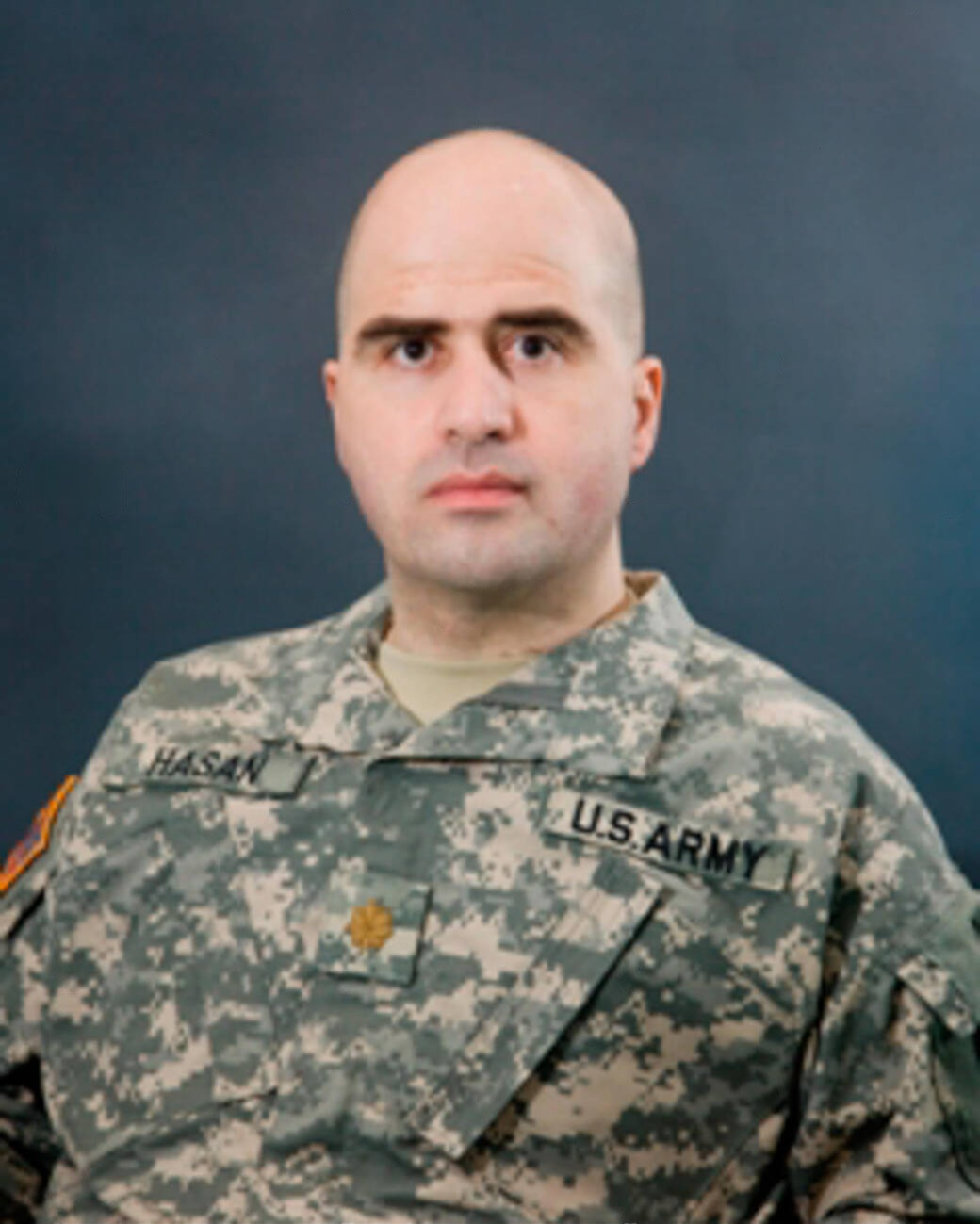
The Pentagon confirmed that the execution of Nidal Hasan by firing squad will be livestreamed, scheduled for 3 December at Fort Hood, Texas, at 2PM ET.
Experts say there is no known precedent for livestreaming a legal execution, and no other country is known to televise or livestream a legal execution. The plan would mark the first US military execution by firing squad since 1945, when Army private Eddie Slovik was executed for desertion during World War Two. The last US military execution of any kind took place in 1961.
Hasan was a US Army psychiatrist who opened fire on 5 November 2009 at a medical facility at Fort Hood, as soldiers waited for medical checks before deployment. He was convicted of 13 counts of premeditated murder and 32 counts of attempted premeditated murder; 12 of those killed and 30 of the wounded were soldiers. A military jury sentenced him to death in 2013. He was shot by a police officer during his arrest and left partly paralysed; he now uses a wheelchair and is 56 years old. In court, Hasan apologised for “any mistakes” and said during his 2013 court martial that he believed he was protecting Muslims and the Taliban in Afghanistan.
Trump approved the execution on the recommendation of Defence Secretary Pete Hegseth, according to the Pentagon. A military execution requires presidential approval under military law. Hegseth, speaking to conservative broadcaster Real America’s Voice, said people should be able to watch because they need to understand there are “serious consequences” for such crimes. When asked whether Hasan had made any final requests, Hegseth replied: “Don’t care. We’ll see him on December 3rd.” Trump said on Friday that Hasan deserved the firing squad but did not mention the livestreaming.
Condemnation across political and religious lines
The UN human rights office warned that livestreaming the execution would breach the absolute prohibition of torture. Archbishop Paul Coakley, president of the US Conference of Catholic Bishops, called it a “barbaric promotion of a culture of death and must be reconsidered.” Democratic Senator Chris Murphy told CNN the idea was “disgusting” and reminiscent of executions carried out by the Islamic State group. Hillary Clinton wrote on social media: “A barbaric idea, beneath our dignity as a country. Push back on this.” Republican Senator Thom Tillis said Hasan should face the death penalty but that broadcasting his execution was “beyond disgusting,” arguing public executions were associated with oppressive regimes. Ned Price, a former deputy to the US representative to the UN, posted that the spectacle would create a martyr for the cause. Justin Mazzola, deputy director of research at Amnesty International USA, said livestreaming would “compound the cruelty of the death penalty and perpetuate the cycle of violence.” Amnesty International recorded at least 17 public executions in 2025, including 11 in Iran and six in Afghanistan.
Alonzo Lunsford, a former US Army sergeant shot seven times in the attack, supported the firing squad method but did not believe everyone should be able to watch the livestream. He supported access for families of the fallen and survivors. Lunsford planned to attend the execution and wanted Hasan to look him in the eyes before the trigger is pulled. “I want him to know he failed. I’m still here,” he said.
Legal terrain and the appellate question
John Mills, a lawyer who works with inmates sentenced to death, called the decision “unprecedented in the modern era” and “on uncertain legal terrain.” Mills said Hasan’s appellate process was not over and he was likely to seek a review of his conviction and sentence in federal court, which would likely stay the execution. Mills said he would be surprised if the execution happened and called it “little more than attention-seeking by the Trump administration.” Deborah Denno, a Fordham University law professor who has studied US execution methods, said “there hasn’t ever been a livestreamed execution” and that it would “force a level of transparency that we have probably never seen before in this country.” Eugene Fidell, a military law specialist at Yale Law School, said Hasan could seek legal action to block the public display of his death. Army Regulation 190-55 restricts witnesses to certain categories, such as journalists and relatives, and excludes people under 18. The BBC asked the Pentagon and US Army whether the rules restricting who can watch will be waived and what safeguards will be in place to stop young people from watching.
No platform has agreed to carry it
TikTok spokesperson Jamie Favazza pointed to policies banning “shocking and graphic content,” including “the moment of someone’s death.” Kick spokesperson Audrey FitzGerald confirmed a livestream of an execution would violate Kick’s Community Guidelines. Meta, Twitch, and X have community guidelines that explicitly state violent content involving death isn’t allowed, while YouTube bans content that encourages dangerous activities risking serious physical harm or death and bars livestreams featuring someone handling a firearm. YouTube, Meta, Twitch, X, and Rumble did not respond to requests for comment on whether they would allow a US government livestream.
A history without recent precedent
The hanging of Rainey Bethea in Kentucky in 1936 is generally regarded as the last US public execution, although another hanging took place in Missouri the following year. The execution of Oklahoma City bomber Timothy McVeigh in 2001 was made available to victims’ relatives through closed-circuit television but was not broadcast publicly. The last military execution in 1961 was of John Bennett, a US Army private hanged after being convicted of raping an 11-year-old Austrian girl; it was authorised by President Dwight D Eisenhower and took place despite the victim’s family asking President John F Kennedy for clemency. Two thirds of Americans, 66%, support executions of murderers, up six points in five years, according to a Pew Research survey conducted in July.
Sources & methods
- BBC News reporting on the Pentagon's confirmation, legal expert commentary, and survivor interviews Archived Oct 9, 2026
- The Guardian reporting on global condemnation, political and religious reactions, and historical context Archived Oct 9, 2026
- The Verge reporting on streaming platform policies and responses to the planned livestream Archived Oct 9, 2026
This article draws on reporting from the BBC, The Guardian, and The Verge, cross-referencing corroborated facts across sources and attributing single-source claims accordingly. Direct quotes from Tillis, Price, and Mazzola are verified against The Guardian’s published reporting (Source 3).