Top US commander addresses mental health concerns aboard USS Abraham Lincoln as Democratic senators demand answers
Admiral Brad Cooper visited the carrier after reports of sailors attempting to jump overboard, while lawmakers press the Pentagon over record-breaking deployment conditions.
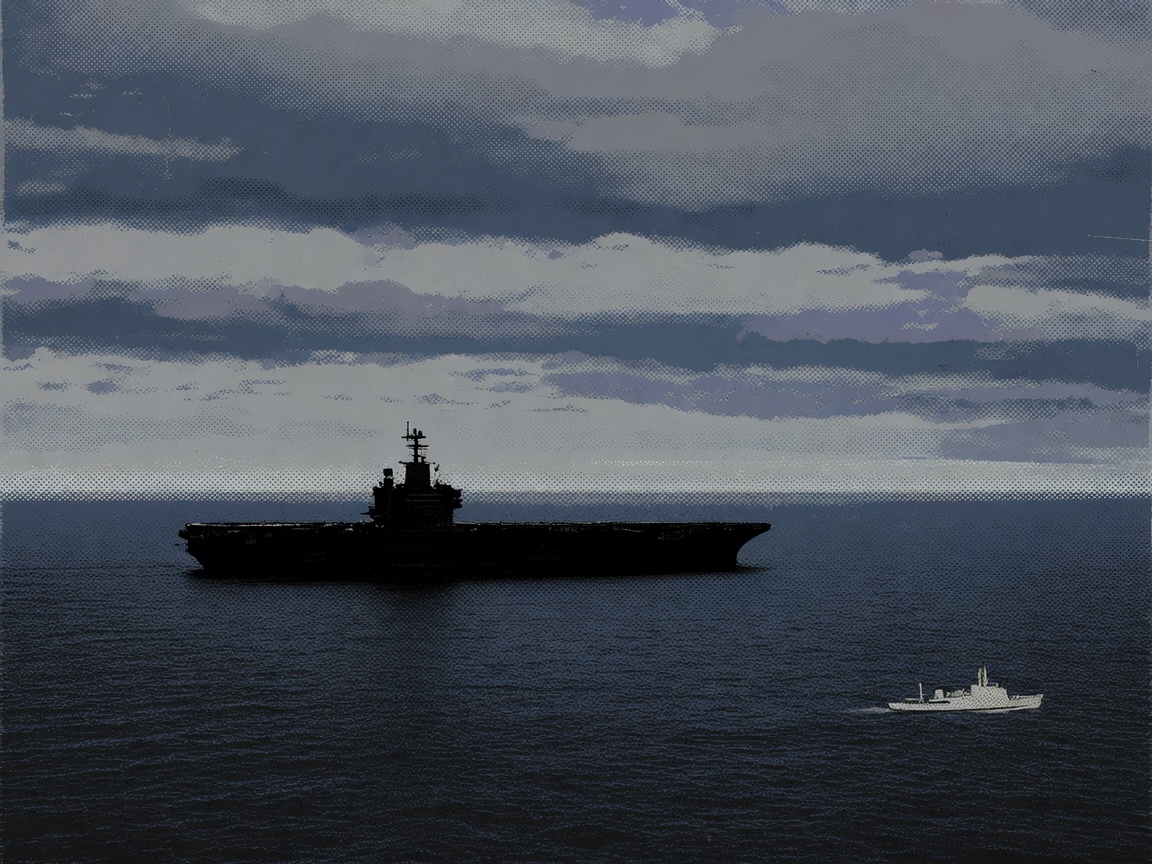
The top US military commander in the Middle East has acknowledged mental health challenges aboard the USS Abraham Lincoln, visiting the warship after reports that sailors attempted to jump overboard during a record-breaking deployment that has kept 5,000 crew members at sea for months without a port call.
Admiral Brad Cooper commands US Central Command. He oversees the war with Iran. On Saturday, he visited the carrier and described the crew as “awe-inspiring.” In a statement posted to X, Cooper said that of the Navy’s 11 active aircraft carriers, the Lincoln currently has “among the lowest number of cases related to mental health.” But he conceded that service at sea for long periods is “uniquely challenging and tough.” Cooper also said the crew “is a strong team of high-achieving Americans standing tall with immense, justified pride in everything they accomplished.”
The Lincoln arrived in the Middle East in January. It has been supporting the US war against Iran, including a blockade on Iranian ports. Its deployment, originally set to end in May, has been repeatedly extended. The carrier has spent more than 240 days at sea without interruption, according to the BBC, while Al Jazeera reported the figure as exceeding 250 days. Personnel have gone more than 200 consecutive days without a port call.
Conditions aboard the ship have included poor sanitation, broken plumbing, infrequent ports-of-call, and shortages of fresh food, according to reports in the Military Times and Stars and Stripes. The Navy Times and Stars and Stripes have also reported multiple attempts by sailors to jump overboard as mental stresses reached a breaking point during the ship’s ninth month at sea. Family members of sailors have expressed concern about deteriorating mental health due to the conditions aboard.
Lawmakers demand accountability
13 Democrats on the Senate Armed Services Committee sent a letter on Saturday to Defense Secretary Pete Hegseth, criticizing the length of the deployment as “a modern-day record” and demanding answers. Senator Kirsten Gillibrand of New York, who serves on the Armed Services and Intelligence Committees, said in a statement that there “must be accountability for the reported deteriorating conditions endured by our service members serving in a reckless war started with no justification, no strategy, and no end in sight.” Gillibrand demanded hearings, accountability, and a clear plan to protect service members and prioritize American families.
Senator Ruben Gallego of Arizona, a retired Marine, said on ABC News’s This Week that problems aboard the Lincoln had kept mounting. He blamed the prolonged deployment on the unresolved war that Trump started with Iran in February and on what he called lackluster leadership from the administration. Gallego said he had spoken to a crew member’s spouse about three days earlier. He warned that dismissive comments from Hegseth and Trump could discourage service members from staying in the military.
Maryland’s Democratic Governor Wes Moore, an Army veteran, told CNN’s State of the Union that the reported conditions were “heartbreaking.” Moore said Trump’s response angered him. “The response of the president of United States pisses me off. And it should piss all of us off,” Moore said. He alluded to Trump’s lack of military service. Moore said he had hoped Trump would show more compassion for service members and their families. Moore added that nobody understands the Iran war, which all Americans are paying for.
Trump and Hegseth downplay concerns
Hegseth has rejected the reports. He called them “completely misrepresented.” Trump, asked Friday whether the Lincoln had been deployed too long, said “No, no, no” and added, “not nearly long enough.” The president said the Lincoln would soon be replaced by another carrier. Trump also said that the ship was moving “right now, or very shortly.”
Retired Admiral Mike Mullen, a former chair of the Joint Chiefs of Staff, pushed back on Trump’s comments during an appearance on This Week, according to the Guardian. Mullen said such lengthy deployments take a toll on crews. He spoke with Cooper on Saturday evening and was told that poor conditions aboard the Lincoln had been addressed. Mullen also said morale among the crew improved after Cooper told the sailors they would be going home. An exact date for the Lincoln’s return has not been announced.
The USS George Washington is heading to replace the Lincoln. It could arrive in the region in about a week, according to the BBC. Cooper’s visit to the carrier came during a 10-day trip that also took him to Bahrain, Iraq, Israel, Jordan, Saudi Arabia, and the United Arab Emirates. He said in his statement that history would record the deployment as “one of the most operationally intense and consequential of the modern era.”
The Navy last week acknowledged supply challenges. It denied a mental health crisis on the Lincoln. Cooper said he applauded Lincoln’s leadership for making mental health and crew resilience a priority, and said he had long believed that mental health is another aspect of individual health requiring attention just like physical and spiritual health.
Sources & methods
- BBC report on Admiral Cooper's visit and statement, deployment timeline, family concerns, conditions aboard the ship, and the Democratic senators' letter to Defense Secretary Hegseth Archived Aug 16, 2026
- Al Jazeera report on Cooper's visit to the USS Lincoln, his description of the crew, the deployment duration exceeding 250 days, and Trump's dismissal of concerns Archived Aug 16, 2026
- Guardian report on Democratic lawmakers' demands for answers, comments from Senators Gallego and Gillibrand, Governor Wes Moore's criticism, retired Admiral Mullen's response, and Trump's remarks on the deployment Archived Aug 16, 2026
- CNBC report on Cooper's statement acknowledging mental health issues, reports of a sailor jumping overboard, Gillibrand's statement demanding hearings, and Trump and Hegseth downplaying conditions Archived Aug 16, 2026
This article was assembled from reports by the BBC, Al Jazeera, the Guardian, and CNBC, cross-referencing deployment timelines, political responses, military statements, and reported conditions aboard the carrier.