Trump vows to block U.S. companies from building data centers abroad after summit with Xi and Putin
The president used a wide-ranging White House press conference to spring a surprise data center ban and tout his trilateral meeting in China as a show of American strength despite few concrete deliverables.
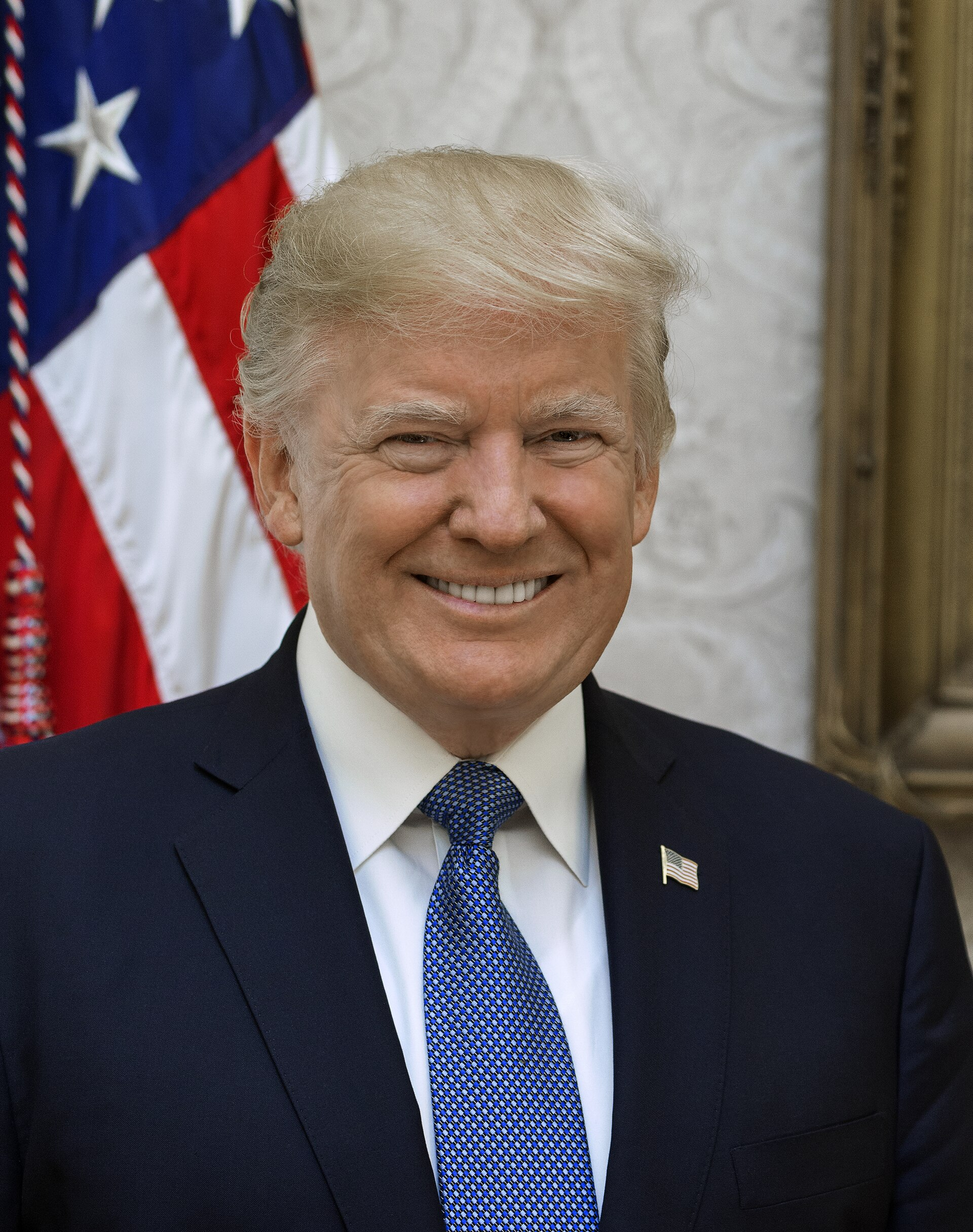
President Donald Trump held a press conference at the White House on Friday after returning from an Asia trip. Flanked by Vice President JD Vance and Secretary of State Marco Rubio, Trump said the U.S. would not allow American companies to build data centers outside the United States.
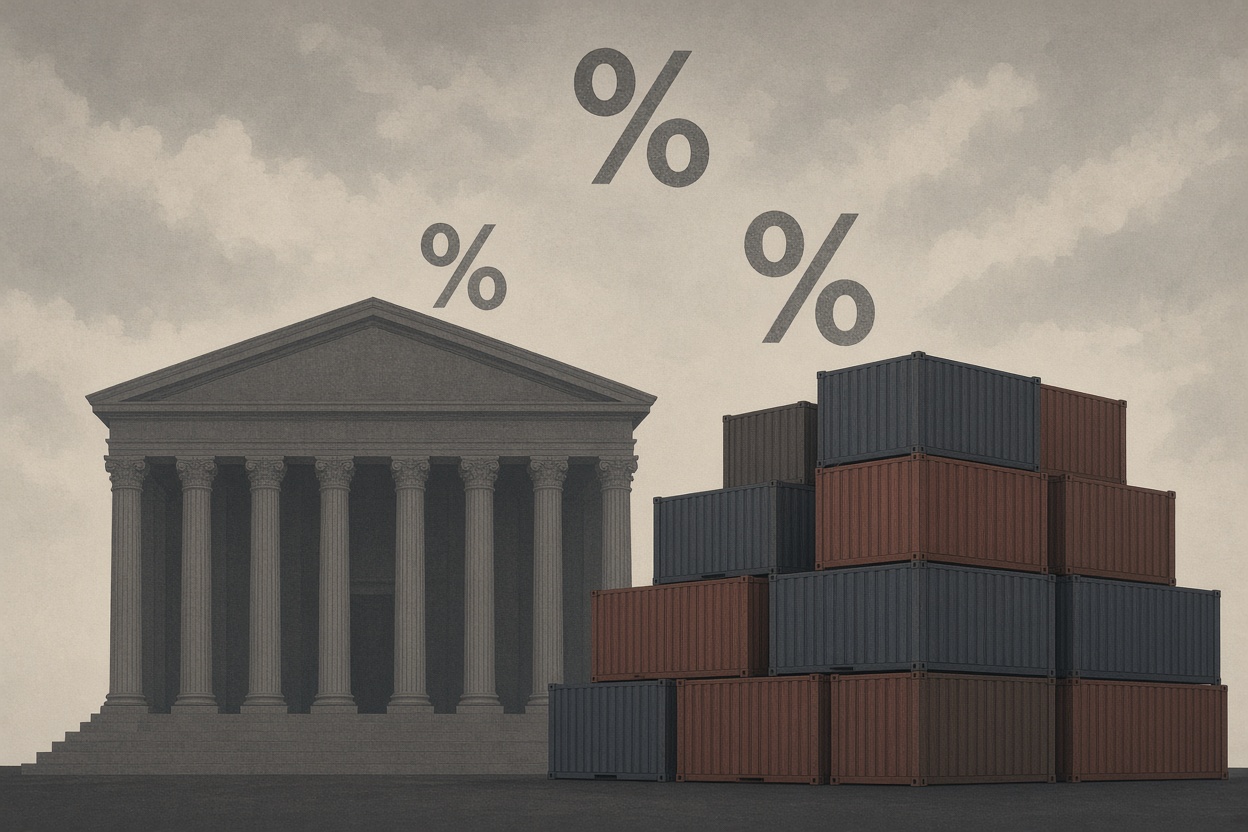
Trump said the policy was news to his own staff. “I don’t know if that’s a breaking story,” he said. “I haven’t even said that to my people. But I’m telling them now they’re here.” He threatened a “tremendous tax” on companies building data centers abroad, saying they are “making so much money they don’t know what to do with it.” Trump said Americans’ electricity costs would go down because data center companies would build their own electricity, and people’s taxes would be reduced as a result. He urged communities to make data centers “pay your community” and “take advantage” rather than shut them off, and said he would continue to push for construction of data centers in the U.S. The president pledged to fight hard for domestic data center construction rather than let China pull ahead, noting America is leading China in AI. A CNBC All-America Economic Survey found 64% of registered voters opposed an AI data center within 10 miles of their home, while 13% supported one. Numerous U.S. tech giants including Alphabet, Amazon, Microsoft, Meta, and Oracle have already built data centers in foreign countries, and international expansion represents a growth opportunity for top cloud infrastructure providers.
A summit with few deliverables
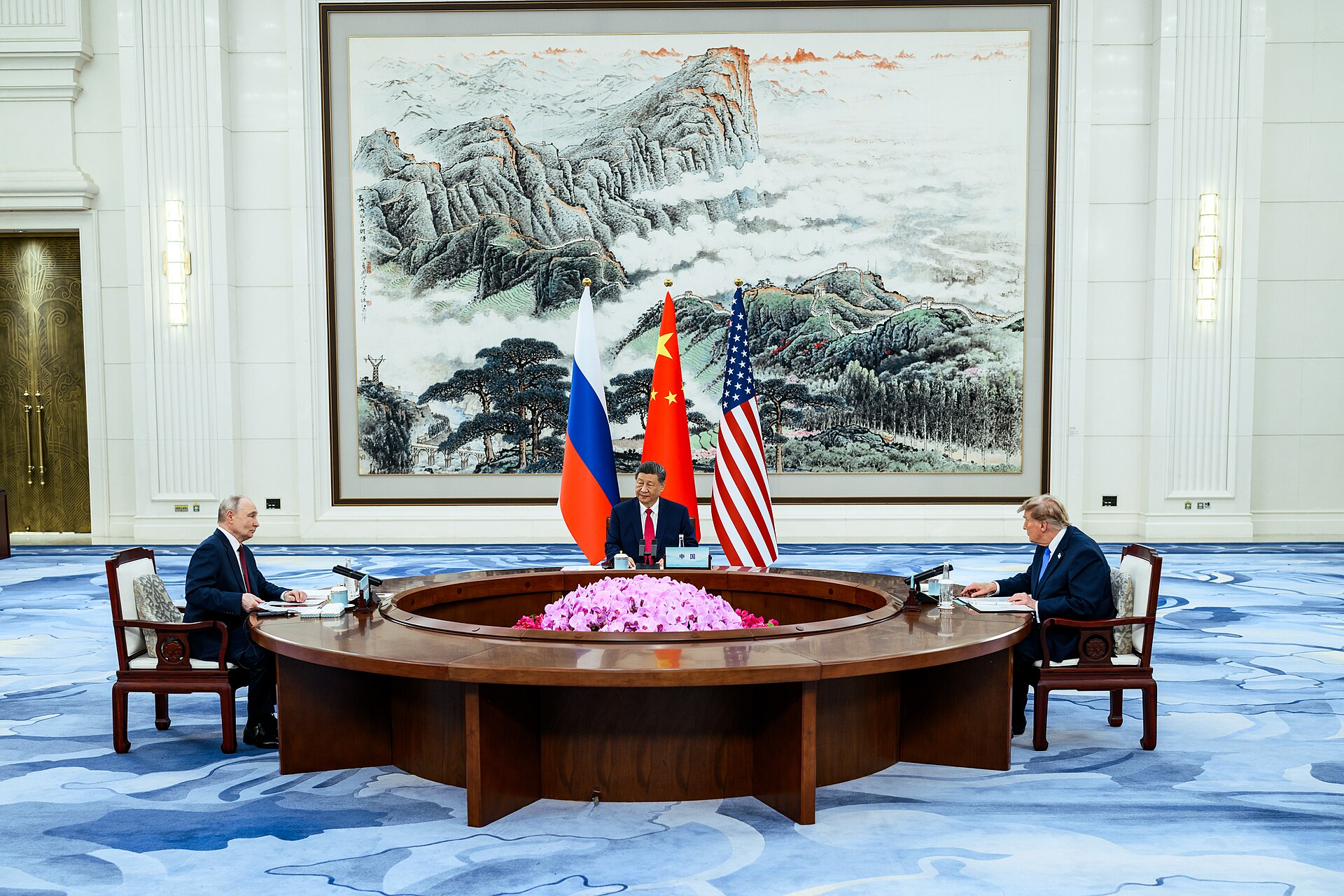
The trilateral summit took place at a lakeside resort in Shenzhen, China, where leaders sat around a large round wooden table. Few tangible results or concrete deliverables emerged. A handout given to reporters showed details about a “declaration toward peace” between the U.S., China, and Russia; one point said the three countries agreed to increase the production and supply of refined petroleum products. Trump said he met with more than 20 world leaders in four days and secured two new trade deals, with about 10 others coming soon. He also visited the Philippines for the tail end of a summit with South Asian leaders. Trump said Xi had never greeted anybody at the airport before, calling it “a great honor,” and his arrival included a military flyover and young dancers. Topics discussed included nuclear proliferation, Iran, and global relations, and Trump said the three leaders command the world’s largest nuclear arsenals. He did not formally take questions while in China, though it is typically expected on presidential foreign trips. Putin held a press conference before leaving China. Trump said the U.S. entered the trip from a position of “unmatched economic and diplomatic strength.” Trump said past leaders avoided talking to nations with whom they had disagreements, and he feels the opposite, adding that no problems were ever solved by refusing to talk and no peace was forged by declining engagement.
AI and ‘super intelligence’
Trump said he and Xi agreed to “joint guardrails” in the race to develop artificial intelligence. Trump prefers the term “super intelligence” over “artificial intelligence” and said Xi also likes that term. “Problem is, it may be too super,” he said. Xi congratulated him on how well the U.S. is doing in the field, Trump said, and the U.S. is leading China. “Whoever wins SI wins,” Trump said.
Ukraine and Russia
Trump said Putin “clearly expressed his desire” to see the war in Ukraine end by diplomatic means, and said there is a “real good chance” it can be resolved. The problem, he said, is “President Zelenskyy and President Putin have tremendous hatred, and that’s never easy.” Russian air strikes in Ukraine continued on Friday. Trump repeated his baseless claim that the 2020 election was stolen and said this precipitated the war. He said the war should have lasted one day and has lasted for five years, by his own account. Trump said Putin is second to the U.S. in nuclear weapons, that he has a “fantastic” relationship with both Putin and Xi, and that his country is safe because of those relationships. He dismissed critics, including some he said were in the room, who argue his relationships with Russia and China are terrible.
Domestic politics and Iran
Trump claimed the Republican midterm losses were because he “wasn’t on the ballot.” Democrats won control of both chambers of Congress in the recent midterm elections. Trump said inflation is higher than when he took office in 2025, and the “world is not happy about the people that did well in the election.” He said voters thought he was “not treated well” by his party because “they didn’t get the things that I wanted passed.” On Iran, Trump said Iran wants to make a deal but not one acceptable to him, and he wants a “real deal, not a fake deal that they’ve been doing for 51 years.” He said he would do the Iran action again because “we cannot allow Iran to have a nuclear weapon,” and said oil prices have been dropping, tying them to developments in Iran. He said Vance’s statement blaming the Republican midterm wipeout on the Iran war was “fine” and “a very accurate statement,” and the war drove up fuel prices “far less than I thought.” Vance likened staying behind to the film Home Alone, but with better food and more gold. Also present were Treasury Secretary Scott Bessent, Defense Secretary Pete Hegseth, White House Chief of Staff Stephen Miller, and aide Natalie Harp.
What it means
Suzanne Maloney of the Brookings Institution said the trip enabled Trump to “bask in the glow of great power amity” after a bruising election outcome. She said Trump wanted the optics of direct engagement with Xi and Putin as validation of his standing as a historical figure. Maloney said both Putin and Xi recognize that Trump’s time and command of U.S. politics are beginning to wane, and have to calculate whether agreements reached with Trump can survive domestic scrutiny or a change of administration. NPR’s analysis noted that Trump has been weakened domestically after devastating midterm elections and has spent years trying to replace the postwar rules-based order, favoring a personal approach to diplomacy with superpowers. The report also observed that Xi and Putin have their own strategic objectives that are not going to change because they are friendly with Trump. For Xi, the meeting allowed him to boast of China’s global leadership by bringing together the world’s greatest nuclear powers. For Putin, it offered a chance to reestablish Russia as a great geopolitical power on par with China and the U.S.
Sources & methods
- NPR, reporting on Trump's White House press conference and the trilateral summit in Shenzhen Archived Nov 20, 2026
- The Guardian, live coverage of Trump's press conference including remarks on Ukraine, Iran, midterms, and data centers Archived Nov 20, 2026
- CNBC, reporting on Trump's data center policy announcement and the CNBC All-America Economic Survey Archived Nov 20, 2026
Reporting based on a White House press conference transcript and coverage from NPR, The Guardian, and CNBC.