Israeli exit polls leave both Netanyahu’s bloc and Eisenkot’s opposition short of a majority
Arab-led parties holding 16 seats become the only path to 61, but neither camp will seat them.

Israeli exit polls projected no clear winner. Netanyahu’s bloc was projected at 56 seats, and Gadi Eisenkot’s opposition alliance at 48 seats per the Central Elections Committee and 49 per The Times of Israel. Neither side reached the 61 seats needed for a majority in the 120-seat Knesset.
Arab-led parties were projected at 16 seats. They belong to neither bloc. Neither Netanyahu nor Eisenkot has said he would embrace Arab parties in a coalition. Those seats represent the only arithmetic path to a majority for either camp. Ra’am leader Mansour Abbas declared that “our vote will change the government.” Amin Saikal, an adjunct senior fellow at Singapore’s S. Rajaratnam School of International Studies, said the pro-Palestinian stance of the Arab-led parties aligns them more closely with Eisenkot than with Netanyahu.
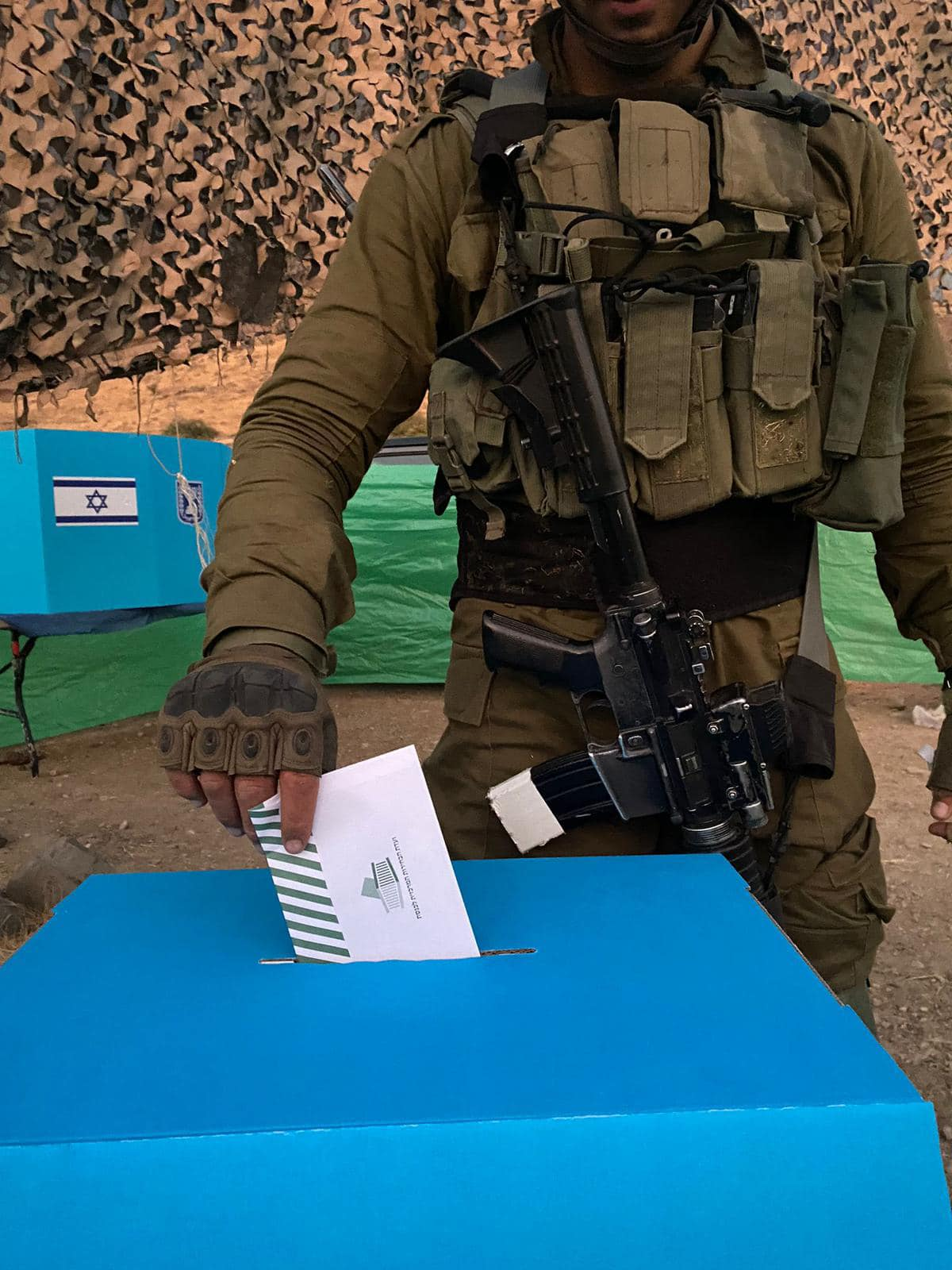
Around 77.7% of eligible voters turned out, the highest in a Knesset election in 27 years, according to the Central Elections Committee. The vote was Israel’s first national election since Hamas’s Oct. 7, 2023 attack and the wars that followed, and was widely seen as a referendum on Netanyahu’s dominance of Israeli politics since 2009.
Netanyahu claims mandate, warns of Arab participation
Netanyahu addressed supporters at Likud party headquarters in West Jerusalem after polls closed. He told them the “true results” were still one or two days away. He insisted that a right-wing government must be formed and said it cannot rely on coalitions with Arab parties “that are against our existence.” He warned that supporters would find themselves with a government of Mansour Abbas and Ahmed Tibi, after posts highlighting long queues at Arab polling stations. Opponents cried racism. Dan Perry told Al Jazeera that Netanyahu used his speech to “spin the situation as best as he could.”
Likud was projected to win 27 seats to 21 for Eisenkot’s Yashar party, according to Israeli Channels 12 and 13. Marwan Bishara, Al Jazeera’s senior political analyst, said Netanyahu was attempting to project a success he does not merit, noting that he cannot form a coalition. “The idea that he is the largest party in Israel kind of hides the fact that this is the lowest Likud has reached since 2009,” Bishara said.
Eisenkot declares victory, claims first right to form government
Eisenkot, a former military chief of staff, declared victory. He said the preliminary results should give him the first right to try to form a government. “The initial exit poll results indicate a complete lack of confidence in Netanyahu and his October 7 government,” he said in a statement on X. His claim rests on a slight edge. The path to a governing majority remains unclear given the refusal of key partners to sit with Arab-led parties. Michael Feller, chief strategist at Geopolitical Strategy, said Eisenkot’s alliance is less likely to form a majority without Arab and left-wing parties. Policies on Iran, Palestine, and security may otherwise stay the same, he added.
Coalition arithmetic and what comes next
Yisrael Beytenu leader Avigdor Liberman, projected at seven to nine seats and currently in the opposition bloc with Eisenkot, refused during the campaign to rely on Arab parties. Alon Pinkas, a former Israeli ambassador who served as consul general in New York City, said the party that secures the majority may have to seek an uncomfortable coalition deal to govern. He noted that opposition voters would reject a deal with Netanyahu’s coalition. Saikal said Netanyahu may use the coming weeks or months to stall formation of the new government and will “fight for his political survival.” Official results are formally published Nov. 4.
Netanyahu has been prime minister since his current term began in 2022. He has become the country’s longest-serving prime minister after past electoral stalemates kept him in office and other parties could not form a governing coalition before deadlines passed. He faces an International Criminal Court arrest warrant over the Gaza campaign. He has rejected it. Israel held five elections between 2019 and 2022. P.R. Kumaraswamy, an emeritus professor at Jawaharlal Nehru University, expects prolonged negotiations after final results. “It is too early to write him off,” he said of Netanyahu.
Sources & methods
- Al Jazeera reporting on Israeli election exit polls, Netanyahu speech, and analyst commentary Archived Oct 28, 2026
- CNBC reporting on Israeli election partial results, coalition arithmetic, and party statements Archived Oct 28, 2026
This article draws on exit poll projections and partial ballot counts reported by Israeli media and the Central Elections Committee, along with statements from party leaders and analysis from political commentators.