Israelis vote in an election that final polls suggest will end in another deadlock
Neither Benjamin Netanyahu’s bloc nor Gadi Eisenkot’s opposition is projected to clear the 61-seat threshold, raising the prospect of a sixth coalition crisis in seven years.
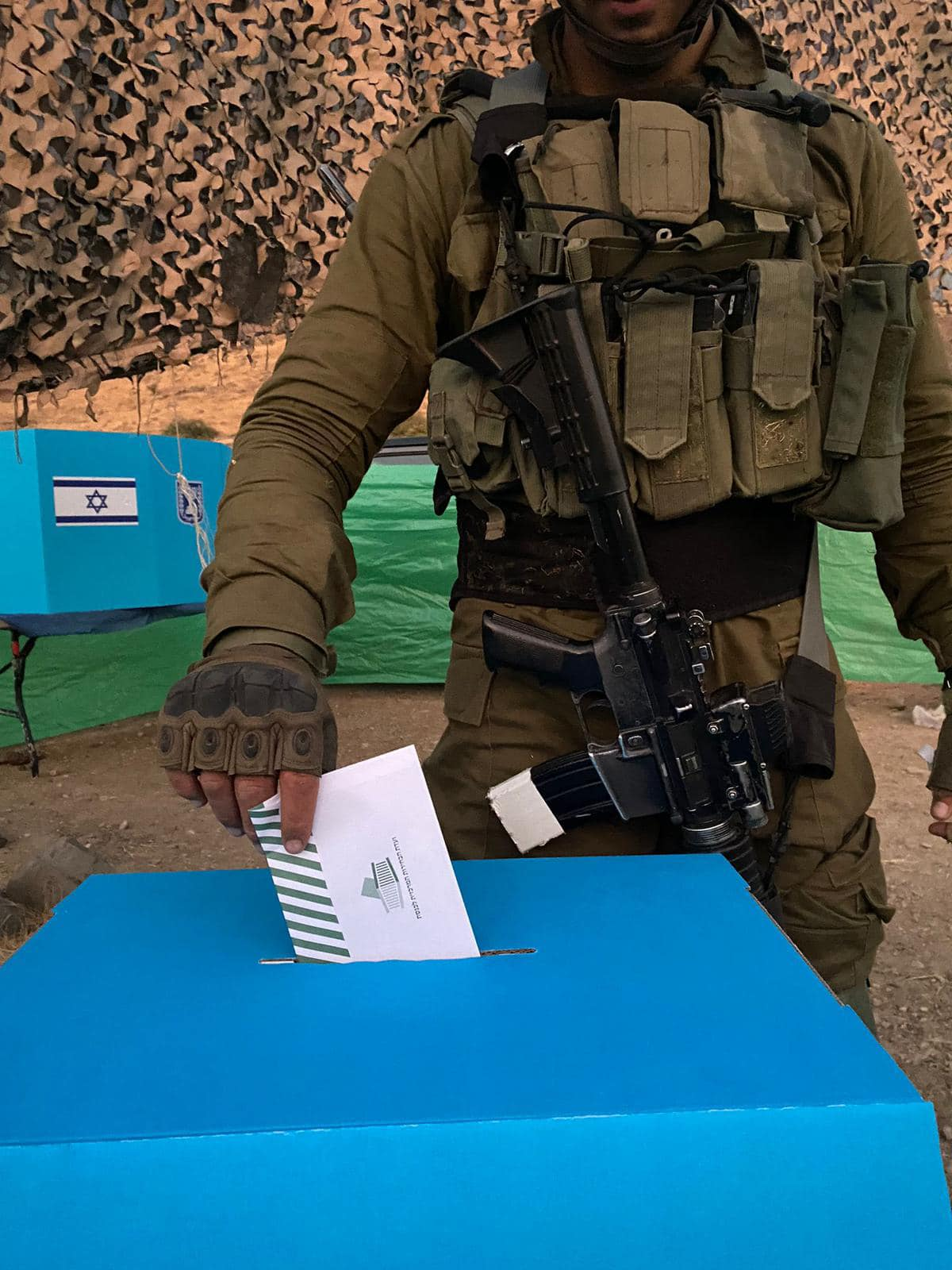
Polls close at 22:00 local time (20:00 GMT) on Tuesday, with exit polls published by Israeli broadcasters once voting closes. Neither bloc is projected to win 61 seats in the 120-seat Knesset, pointing to weeks of coalition wrangling ahead.
According to Haaretz, an average of Channels 11, 12 and 13 predicts Netanyahu’s bloc will win 50 seats while Eisenkot’s opposition bloc will take 54. BBC reported that Eisenkot leads the newly formed Yashar Party and heads the opposition change bloc, which includes Naftali Bennett, Avigdor Lieberman, and Yair Golan, and that Netanyahu first served as prime minister in 1996. Between 2019 and 2022, Israel held five separate elections, BBC reported.
Security dominates a volatile campaign
The campaign has been dominated by security issues, including criticism of Netanyahu over the October 7 Hamas-led attacks, which BBC reported killed nearly 1,200 people and saw 251 taken to Gaza as hostages. The opposition pushed for an independent commission of inquiry into the attacks; Netanyahu resisted, calling it biased. Netanyahu framed himself as ‘Mr Security,’ citing strategic victories and his close relationship with US President Donald Trump, according to BBC. Channel 12 reported that Netanyahu pushed for last-minute military action that could trigger a confrontation with Iran, opposed by military chief Eyal Zamir. CNN reported that Netanyahu tried to persuade Trump to carry out new strikes on Iran, but Trump refused; Netanyahu denied both reports. BBC reported that Netanyahu posted an AI-generated image of a nuclear bomb hitting Tel Aviv, warning he is the only leader who can protect Israel ‘if the Iranians acquire nuclear weapons.’
Eisenkot called Netanyahu ‘hysterical,’ according to BBC, yet takes a broadly similar position to Netanyahu on Gaza, pledging to end Hamas rule within 18 months through a US-led peace plan or military means. BBC reported that Israel has continued to strike Gaza almost every day since a ceasefire was agreed last year, and that the Israeli military has killed more than 74,000 people since the start of the war, according to Gaza’s Hamas-run health ministry, whose figures are considered reliable by the UN. Netanyahu faces an ongoing corruption trial, which he denies. He is still pursuing judicial reform plans that led to mass protests before October 7, BBC reported. Disputes over ultra-Orthodox military conscription are a major election issue.
Coalition math and the Arab-party question
Israel uses a proportional representation system, and no single party has ever won an outright majority, so governments are always coalitions. According to Al Jazeera, a party must secure at least 3.25% of the national vote to enter the Knesset, and about a dozen parties are widely thought to have a chance of crossing the threshold. BBC reported that about one-fifth of Israel’s population is Arab, with many describing themselves as Palestinian citizens of Israel, and that all but one leading Jewish party has ruled out working with Arab parties. Lieberman has ruled out being part of an arrangement where Arab parties informally prop up an Eisenkot-led minority government, BBC reported. The two-state solution has all but disappeared from mainstream Israeli politics, BBC reported. Eisenkot largely supports Israeli settlements in the West Bank but wants to crack down on extremist Jewish settlers, and has spoken about creating conditions for ‘autonomy or a state-minus’ for Palestinians under ultimate Israeli security control, according to BBC.
Al Jazeera reported that President Isaac Herzog will speak with party leaders about who they want as prime minister, then tap the candidate he believes has the best chance of forming a government. The nominated candidate has up to 42 days to form a government. If no government can be formed, Netanyahu’s current government remains as caretaker. If all coalition negotiations fail, new elections would be called.
High turnout and a slow count
About 7.3 million Israelis are eligible to vote, including 1.2 million Palestinian citizens of Israel, Al Jazeera reported. BBC reported that turnout is at its highest since 1981, with an unprecedented 70,000 people reportedly flying home from abroad to vote and hundreds of thousands set to cast ballots for the first time. Israelis living abroad cannot vote, Al Jazeera reported; diplomats and state emissaries are the exception and cast ballots at Israeli missions on October 20. Hundreds of thousands of Israeli soldiers and reservists will cast ballots, many not counted until Wednesday, potentially providing a late boost for right-wing parties, BBC reported. Al Jazeera reported that the final vote tally is expected by Friday, and official election results are formally published on November 4. Netanyahu’s Likud will meet in Jerusalem and Eisenkot’s Yashar will assemble in Tel Aviv on election night, BBC reported.
Sources & methods
- BBC News reporting on Israel's election, campaign dynamics, and security context Archived Oct 27, 2026
- Al Jazeera reporting on Israel's electoral system, voting logistics, and result timelines Archived Oct 27, 2026
This article draws on two published reports covering Israel’s election: a BBC News analysis of the campaign and security backdrop, and an Al Jazeera guide to the electoral system and result procedures. Corroborated facts appearing in both sources are presented without attribution; facts drawn from a single source are attributed within the text.