Spain demanded an urgent meeting of EU interior ministers after a mass border crossing into the North African enclave of Ceuta and a wave of punitive responses from fellow member states that Madrid has branded unlawful.
More than 50,000 people crossed from Morocco into Ceuta on Thursday and Friday, according to the Guardian, while the BBC reported the figure at about 60,000. At least 67 people died. Some people drowned. Others were crushed as they tried to cross a breakwater barrier. By Saturday, Spanish officials said almost all the migrants had returned, with more than 48,000 having voluntarily left by Friday evening.
The crisis triggered immediate diplomatic fallout. Italy suspended its Schengen arrangements with Spain for a month, with Prime Minister Giorgia Meloni calling the scenes “shocking” and describing “uncontrolled immigration” as a threat to national security. Finland and Denmark backed Italy’s move. Czech Prime Minister Andrej Babiš urged a temporary suspension of Spain’s Schengen membership. France tightened checks on its border with Spain and said it would increase its police presence by Saturday. Portugal said it was considering reinforcing border checks.
Spain responded sharply. Madrid summoned the Italian ambassador. Foreign Minister José Manuel Albares said he expected “European solidarity and not partisan demagoguery.” Italy’s Foreign Minister Antonio Tajani had blamed the crisis on Spain’s now-closed scheme to regularise more than 1 million undocumented migrants and asylum seekers, calling the programme “profoundly wrong.” Albares said the comments were “unbecoming” and accused Italy of partisan demagoguery.
Sánchez pushes back
In a letter to European Commission President Ursula von der Leyen, European Council President António Costa, and Irish Prime Minister Micheál Martin, whose country holds the EU presidency, Sánchez wrote that he had “serious concerns” about some European governments. He said most had shown support, but others had chosen to attack Spain “driven by prejudice, fake news, ignorance, or political interest.” He said such an attitude was contrary to European law and the principles of solidarity that bind member states together.
Sánchez pointed out that Ceuta is not part of the Schengen area. He said Spain had restored border control and prevented any “unauthorised onward movement towards continental Europe” in less than 48 hours. He also noted, according to the Guardian, that Spain was “according to Frontex, one of the least porous external borders of the European Union, with a number of irregular entries that is half that recorded, for example, in Italy in recent years (2021–2026).”
“The European Union cannot afford this kind of selfish, polarising and unlawful reaction,” Sánchez said. He called for an urgent video conference of EU interior ministers to reaffirm that external border security is a shared responsibility. Separately, 22 of the EU’s 27 countries signed an open letter calling for emergency talks, citing “serious concerns” about developments in Ceuta and urging mobilisation of EU instruments to restore effective border control.
Situation on the ground
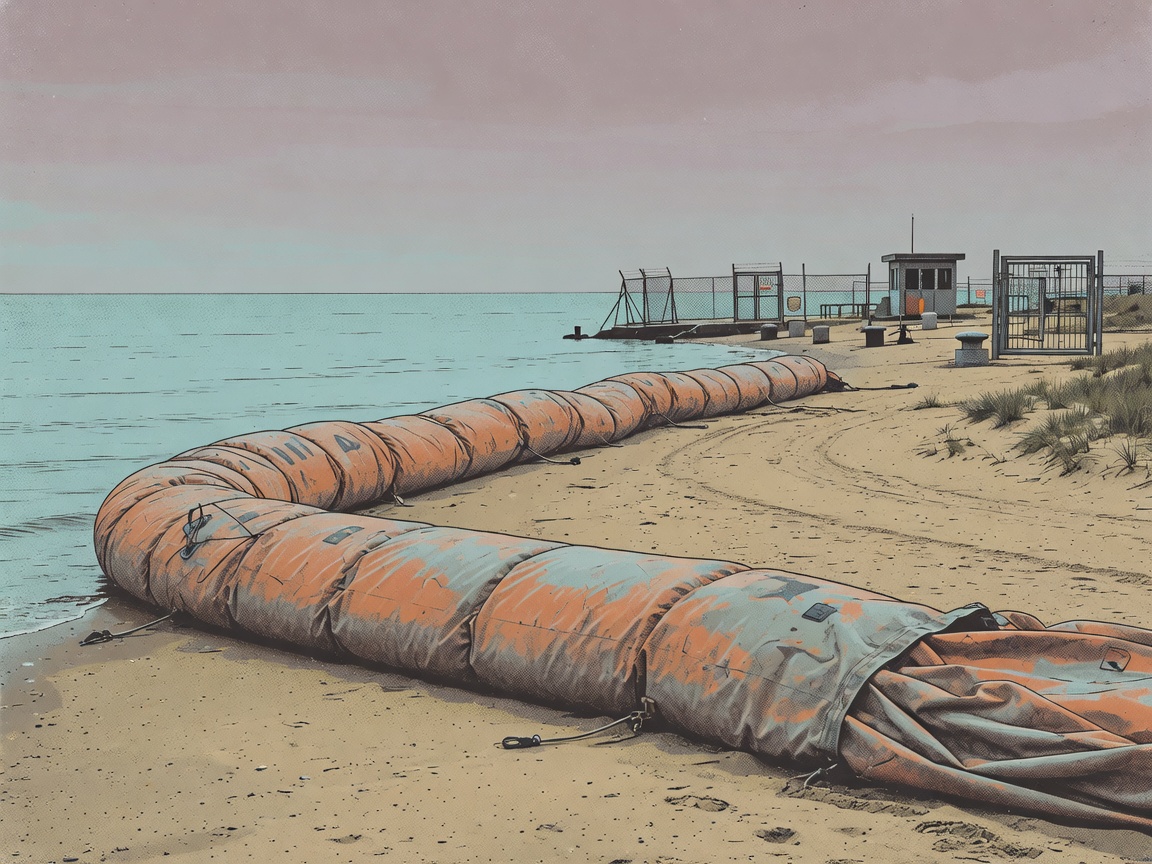
Interior Minister Fernando Grande-Marlaska told reporters on Saturday that the situation had almost returned to normal. “Almost all of [the migrants] have already left Ceuta,” he said. Businesses had reopened. Spain had started to establish an inflatable maritime barrier to prevent further illegal migrant entry. The government also deployed troops and additional police to the enclave.
Finland’s Interior Minister Mari Rantanen said she had started preparations for restoring internal border checks “if the need arises” and urged “all European countries” to support Meloni’s move. Danish Prime Minister Mette Frederiksen urged the EU to “consider all options, including a suspension of Schengen co-operation.” Von der Leyen called the images from Ceuta “unacceptable” and said, “We cannot allow anyone to come to our Union without abiding by our rules.” German Chancellor Friedrich Merz said he “supports Spain’s intention not to allow illegal migrants onto the European continent.”
The Spanish government said in a statement that the situation in Ceuta remained calm. “Friday night passed without incident,” it said. “Entries were completely halted, while departures to Morocco continued without any notable events.” The Schengen Area is a system of open borders spanning 29 European countries that have abolished controls at their common borders. Ceuta, together with Melilla, forms the European Union’s only land borders with Africa. Senior EU officials were due to meet on Saturday in a “political crisis response team” convened by Ireland’s presidency. Ireland’s justice minister, Jim O’Callaghan, said he had been in touch with Grande-Marlaska to express solidarity. “I will remain in close contact with the Spanish government, member states and the EU institutions as the situation evolves,” he said.
Among those waiting in Ceuta was Souleil Boyan, a 19-year-old from Senegal, who told Agence France-Presse: “We hope to go to Europe to work and earn a living – that’s it.” He added: “We all know that in Africa there isn’t much opportunity.” This week’s crossing dwarfs the last similar event in 2021, when Morocco loosened its border controls and about 8,000 people entered Ceuta over a matter of days, according to the BBC. The Guardian placed the 2021 figure at about 10,000 over two days. During the summer months, there is often a big push to reach Ceuta, typically organised over social media. Migrants can enter the enclave by swimming several kilometres.
In June, the European Parliament approved tougher migration rules that grant authorities broader powers to return irregular arrivals. Spain has a relatively friendly approach to immigration. In April, the government approved plans to give legal status to 500,000 undocumented migrants, according to the BBC, allowing them to be formally integrated into the workforce. At that time, the right-wing Italian prime minister had already criticised Sánchez, saying the policy would “affect its neighbours.”