DoorDash is acquiring Instacart for approximately $17 billion to crack online grocery
The deal, announced Thursday, would unite two dominant on-demand delivery platforms as Amazon and Walmart race to build their own grocery logistics.
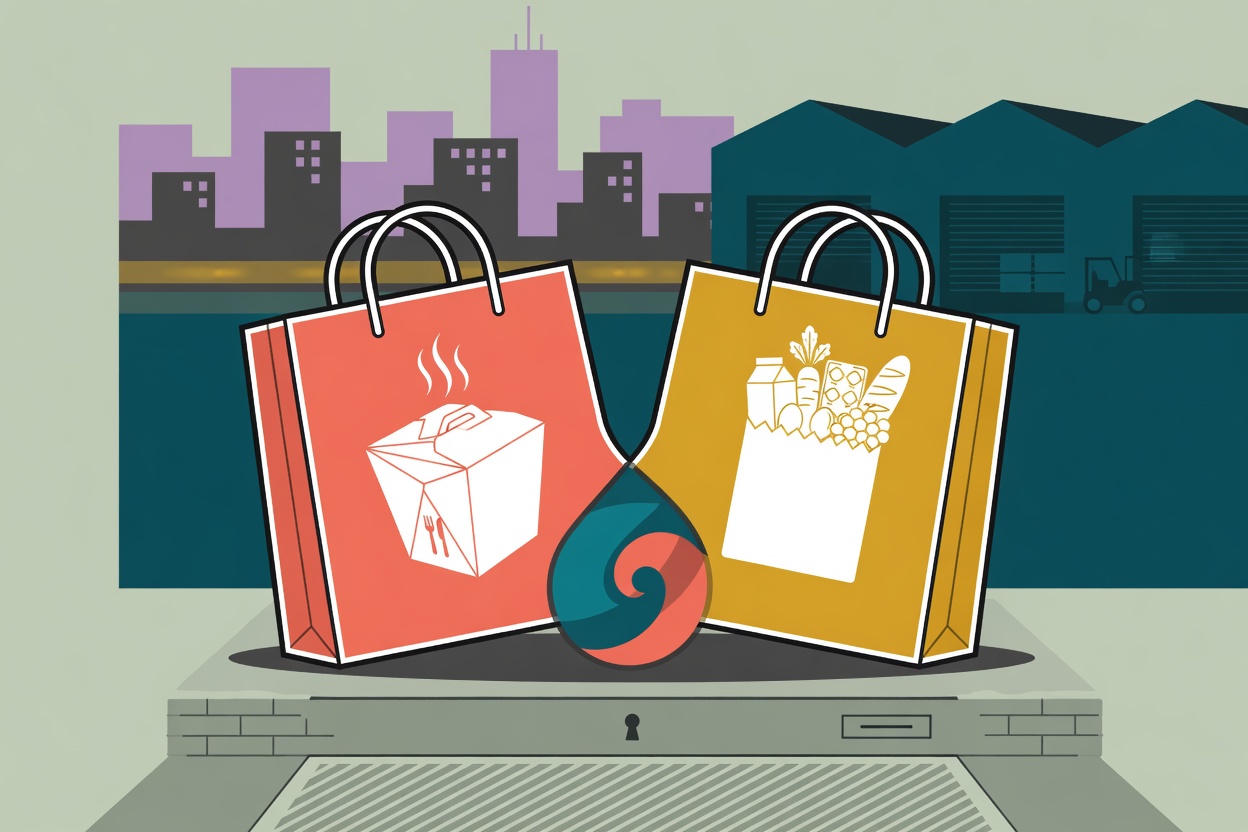
DoorDash is acquiring Instacart for approximately $17 billion, the companies announced Thursday, a deal that would give the restaurant-delivery giant a dominant position in online grocery at a moment when Amazon and Walmart are racing to build their own grocery logistics.
DoorDash will pay $65 per Instacart share, an 11% premium to Instacart’s closing price on Wednesday and about 26% above its closing price on Oct. 22, the last trading day before reports of a possible sale surfaced. The boards of both companies approved the transaction. The deal is expected to close at the end of 2027 or in the first half of 2028, subject to regulatory approvals and other closing conditions. The two brands will continue to operate as separate and independent companies until the transaction closes.
DoorDash shares jumped more than eight percent in premarket trading following the deal news. Instacart traded near the flatline.
Why DoorDash wants grocery
DoorDash CEO Tony Xu cast the acquisition as a marriage of complementary strengths. “Someone has to pick a ripe avocado, find a substitute you’d choose yourself, and get the ice cream to you before it melts,” Xu said. “Instacart has spent years learning to do that well for grocers, while DoorDash has built a delivery network and technology that local stores rely on every day.” Together, Xu said, the companies could give stores of every size more of those tools and realize the potential of grocery delivery. “It’s still early innings, but we know that when more people shop local, more dollars stay local.” In a statement, DoorDash warned that the biggest online retailers and grocers are racing ahead, building their own delivery fleets, warehouses, membership programs, and AI shopping assistants. A grocer or retailer running on thin margins cannot build all of that alone, the company said.
Instacart CEO Chris Rogers said the combination builds on more than a decade of work. “Over the last 14 years, Instacart has transformed online grocery by helping retailers of all sizes compete and grow, and joining forces with DoorDash allows us to do even more,” Rogers said. DoorDash says the acquisition will give Instacart users access to more than 50,000 additional stores, and DashPass and Instacart Plus members will be able to pay one membership fee instead of two. DoorDash plans to retain Instacart’s brand, app, and enterprise technology products after the deal closes. Local grocers will be free to work with either delivery service post-close, and Instacart shoppers will retain flexibility around working hours and which orders to accept, with the option to choose whether to take on DoorDash orders.
A crowded field
Instacart faces intensifying competition from Amazon and Walmart in grocery delivery. Amazon has doubled down on online grocery after slowing its brick-and-mortar grocery effort, leveraging its vast fulfillment footprint to speed up deliveries of household essentials, pantry staples, and perishables. Both Amazon and Walmart have pushed further into same- and next-day delivery, posing a threat to the on-demand delivery model that Instacart and DoorDash rely on. DoorDash’s rivals, meanwhile, have been stepping into food delivery, with Uber acquiring Postmates and Delivery Hero. DoorDash started as a restaurant delivery service and has since expanded, adding retailers including Sephora, Macy’s, Staples, and Anthropologie to its marketplace. The company announced a partnership with Kroger last year and added a stable of regional grocers.
Antitrust question mark
Wedbush analysts wrote in a Monday research note that a combination could attract antitrust scrutiny given the companies’ market overlap. They noted that third-party delivery platforms remain a minority of total grocery consumption, but that slicing the online market more narrowly, or viewing grocers as enterprise customers, can make approvals more challenging.
How the deal came together
Speculation about a transaction began circulating last week, when The Information reported that Instacart was in talks with Uber and DoorDash regarding a potential sale. Bloomberg reported that Uber had walked away from discussions. On Monday, The Wall Street Journal reported that DoorDash was in advanced talks with Instacart and that a deal could be reached as soon as this week. Sources familiar with the matter told CNBC on Wednesday that the deal could be announced as soon as Thursday morning.
DoorDash earnings beat alongside deal
DoorDash reported its third-quarter results alongside the deal announcement. Adjusted earnings per share were $1.06, beating the average analyst estimate of 84 cents per share, according to LSEG. Revenue came in at $4.62 billion, topping LSEG estimates of $4.56 billion. Marketplace gross order value grew 36% year over year to $33.9 billion, beating consensus estimates of $33.6 billion. Total orders reached 993 million, up 28% from a year ago.
Instacart, which went public in 2023, agreed to pay $60 million in December to settle Federal Trade Commission allegations that it misled users with false advertising and deployed unlawful subscription enrollment practices. The company currently has a market cap of more than $13 billion, and its stock price is up 25% year to date.
Sources & methods
- CNBC, reporting on the deal announcement, terms, market reaction, DoorDash Q3 earnings, competitive landscape, and antitrust commentary. Archived Oct 29, 2026
- The Verge, reporting on the acquisition, post-close commitments, DoorDash's competitive rationale, and deal timeline. Archived Oct 29, 2026
- TechCrunch, reporting on the acquisition, board approval, executive quotes, Instacart's market cap, and Uber's withdrawal from talks. Archived Oct 29, 2026
Reported from CNBC, The Verge, and TechCrunch. Quotes checked against source texts. Financial figures were cross-referenced across multiple sources where corroborated, and deal terms were verified against more than one outlet before publication.