Iran and US resume mutual strikes after brief lull in fighting collapses
Iran fired ballistic missiles at American forces in the Middle East, with Axios reporting the target was a US base in Jordan, while US-Saudi forces struck Iran-backed groups in eastern Iraq, ending a pause in hostilities and sending oil prices sharply higher.
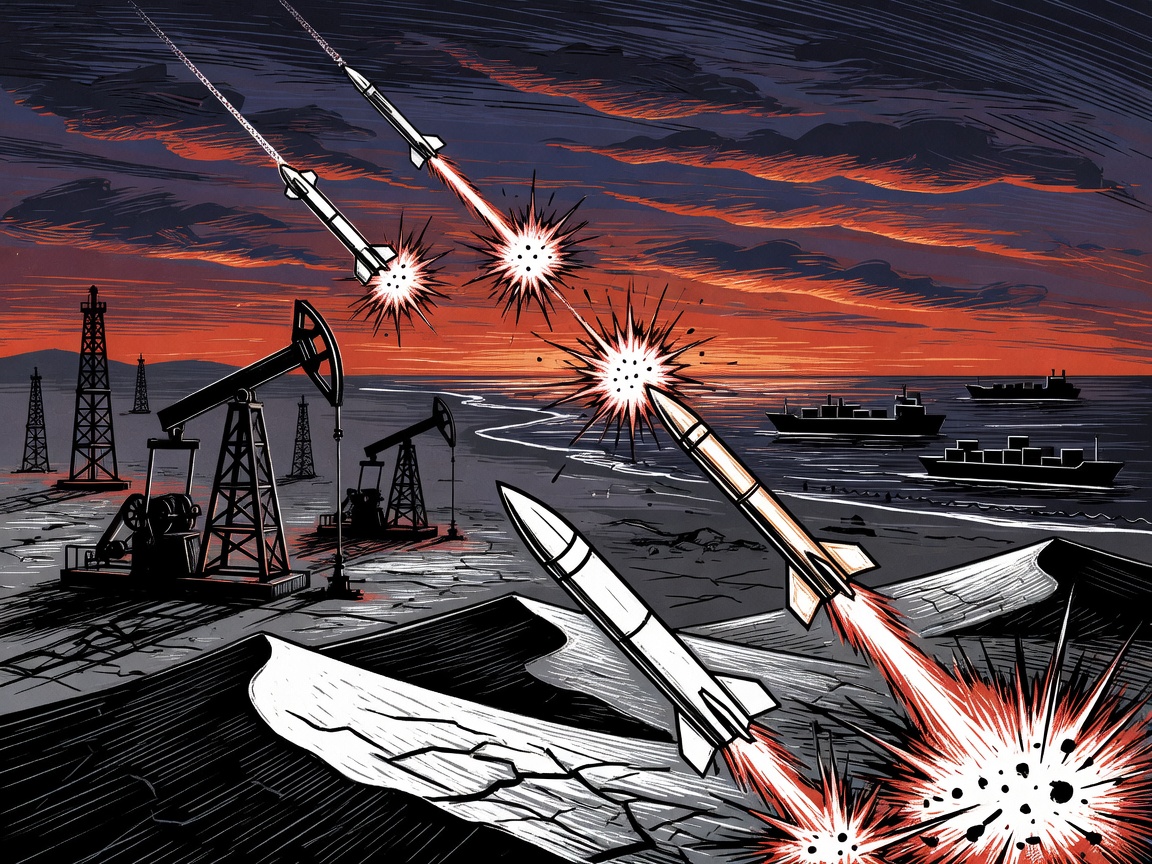
Iran launched multiple ballistic missiles at American forces in the Middle East on Tuesday, shattering a brief lull in hostilities and drawing immediate retaliation from US and Saudi forces against Iran-backed groups in Iraq. All Iranian missiles were intercepted. Oil prices surged.
The attack came at 17:45 EDT. US Central Command said Islamic Revolutionary Guard Corps forces fired the missiles from Iran in what it called an “attempted surprise attack” on American forces based in the region. Centcom did not disclose target locations. Axios, citing US officials, reported the missiles were aimed at a US base in Jordan.
The US and Saudi Arabia then struck back. In a statement on X, Centcom said the two forces hit “multiple terrorist logistics and weapons sites” in eastern Iraq, calling it retaliation for more than 30 drone attacks directed by the IRGC over the preceding 72 hours. Centcom warned that Iran’s military “and its terrorist proxies must cease these attacks to avoid further US military response.”
Saudi Arabia’s defence ministry said the strikes were carried out in coordination with US Central Command. Riyadh said its air defences had intercepted and destroyed several drones that attempted to target petroleum facilities in the Eastern Province and Riyadh regions, launched from Iraqi territory by what it called Iran-aligned terrorist militias. “The Kingdom emphasizes that it does not seek escalation but will respond to any aggression it faces,” the statement said.
The Islamic Resistance in Iraq, an umbrella group of Iran-backed armed groups, denied any role in the drone attacks. It called the Saudi claims “fabrications” and warned that “any foolish Saudi action will be met with a harsh response.”
The renewed hostilities came a day after President Donald Trump spoke of “very friendly negotiations” with Iran. At that point, the two sides had not exchanged strikes for a third consecutive day, according to the BBC. CNBC described the pause as a two-day halt in hostilities. Iran had indicated it would stop carrying out attacks as long as the US refrained from striking, Reuters reported on Sunday, citing a senior Iranian official. Tehran has denied that negotiations are even happening.
Strait of Hormuz and diplomacy
Access and control of the Strait of Hormuz remains a key sticking point. Iran has warned of “any action” to maintain control of the waterway. The latest strikes coincided with Israeli Prime Minister Benjamin Netanyahu’s visit to Washington, where he met Trump at the White House and attended the funeral of US Senator Lindsey Graham, a prominent Iran hawk.
Oil surges on renewed conflict
Oil prices surged in Asia trading. Brent crude futures for September delivery gained 3.42% to $86.97 a barrel. West Texas Intermediate futures for June advanced 3.58% to $82.09 per barrel. The spike followed three straight days of declining prices during the brief pause. Houthi attacks on Saudi oil facilities have also raised supply concerns. Bjorn Vang Jensen, executive industry advisor at Xeneta, said on CNBC that Houthi strikes on oil production, storage, and port infrastructure could disrupt supply across the region.
The UK Maritime Trade Operations Centre reported “suspicious activity” in the Red Sea. The master of a tanker reported hearing an explosion while transiting the southern Red Sea, though no further details were given. Houthi rebels claimed to have attacked two Saudi oil tankers in the area last week, with Saudi Arabia retaliating against the rebels. The Bab el-Mandeb strait is a critical export channel for Saudi oil diverted from the Strait of Hormuz. Experts have warned that a closure would trap those barrels and worsen the oil disruption triggered by Iran’s attacks on tankers in Hormuz.
At least 624 US military service members have been wounded since Trump ordered strikes against Iran in February, according to recent Pentagon data. The Pentagon said 417 of those personnel were injured in relation to Operation Epic Fury, the joint US-Israeli military operation against Iran. Trump had set aside plans to escalate the war amid worries over diminishing stockpiles of Patriot interceptors and other air defense munitions in the Middle East, according to The New York Times. Trump dismissed concerns over stockpile depletion.
Iraqi Prime Minister Ali al-Zaidi is expected to travel to Saudi Arabia on Thursday, days after he ordered Iraqi security agencies to investigate the drone attacks on Saudi Arabia. The Iraqi military said in a statement on Monday that Iraq is committed to preventing its territory from being used as a route or launching point for any attack targeting brotherly or friendly countries.
Separately, the spike in oil prices was compounded by Chairman Kevin Warsh’s hawkish tone at his first FOMC meeting as Federal Reserve chair, according to Kitco. Traders remain split on the central bank’s decision due Wednesday.
Sources & methods
- BBC News report on Iran and US trading strikes, including Centcom statements, Saudi drone interceptions, Trump negotiations, Strait of Hormuz, Netanyahu visit, and Pentagon casualty figures. Archived Jul 29, 2026
- CNBC report on Iran's surprise ballistic missile attack, citing Centcom posts on X, Axios reporting on the Jordan base target, Saudi coordination, oil price surge, Patriot stockpile concerns from The New York Times, Reuters on Iranian ceasefire conditions, and UK Maritime Trade Operations Centre Red Sea advisory. Archived Jul 29, 2026
- CNBC report on oil price jumps following resumed US-Iran strikes, with Brent and WTI futures data, Centcom statements, Red Sea suspicious activity, Houthi supply concerns from Xeneta's Bjorn Vang Jensen, and Fed Chair Kevin Warsh's FOMC tone per Kitco. Archived Jul 29, 2026
- Al Jazeera report on Saudi-US strikes against Iran-backed groups in Iraq, Saudi defence ministry statement, Iraqi Prime Minister Ali al-Zaidi's planned travel and investigation order, Iraqi military statement, and Islamic Resistance in Iraq's denial and warning. Archived Jul 29, 2026
- Al Jazeera liveblog confirming US and Saudi strikes on Iran-aligned groups in Iraq in retaliation for 30 IRGC-directed drone attacks, and identifying the US base in Jordan as the target of Iran's ballistic missile attack. Archived Jul 29, 2026
This article was compiled from wire reports and statements published by BBC, CNBC, Al Jazeera, and Axios, drawing on official Centcom and Saudi defence ministry statements, Pentagon data, market reporting, and Reuters.